

Will Jesus return by 2027?
Will Ronaldo cry at the World Cup?
Next leader out of power before 2027? (No Orban)
These are the bizarre questions pondered by members of prediction markets, and the same speculative traps on which everyday people are betting their entire life savings. Precisely speaking, the question “Will Ronaldo Cry at the World Cup?” reached a trade volume of a whopping $23.94 million before Spain knocked Portugal out of the 2026 FIFA World Cup on July 7th, 2026. We are no longer just watching history happen. Welcome to today’s unique world, where prediction market giants financially incentivize everyday chaos as wagers, and people bet, or rather “trade,” on literally everything.
At the heart of this phenomenon lies the concept: “Wisdom of the Crowd”. It’s an idea that the collective opinion of a large group of independent people is more accurate than the judgment of a single expert. When a large group of people put their money on the table, the bias disappears. Take the 2024 US Presidential Elections as a case study. Mainstream media models and poll-based forecasts predicted a historically tight race or a Kamala Harris victory. But prediction markets, most notably Polymarket, favored Donald Trump as early as the summer of 2024. While experts widely criticized prediction markets as inaccurate, Trump’s decisive win showed that the crowd had correctly calculated the margins experts ignored. That single event cemented prediction markets’ mainstream status with a staggering $3.6 billion in trading volume.
By combining crowd intelligence with financial incentives, prediction markets have paved the road to unprecedented growth. The industry recently surpassed the $50B monthly trade volume milestone, with Kalshi and Polymarket leading the way, primarily attributable to the 2026 FIFA World Cup and, to some extent, CR7.
However, since the exponential boom in prediction markets, the same question is asked again and again: Why is it legal even though sports gambling faces massive restrictions? The answer to this question lies in the law behind it. The major prediction market platforms are regulated at the federal level primarily by the Commodity Futures Trading Commission (CFTC) in the US, which labels prediction markets as “financial exchanges” rather than sportsbooks or casinos. The wagers are structured as derivatives and event contracts, and this subtle distinction allows them to operate in all 50 US states. The turning point occurred in 2024, when Kalshi won a historic legal battle against the CFTC, fully legalizing multi-million-dollar bets on US congressional control and scrubbing away the sports-betting stigma.
But just like every other coin, prediction markets have two sides. One side acts as a highly accurate predictor of human behavior and world events, offering a truer perspective than mainstream media outlets and experts.
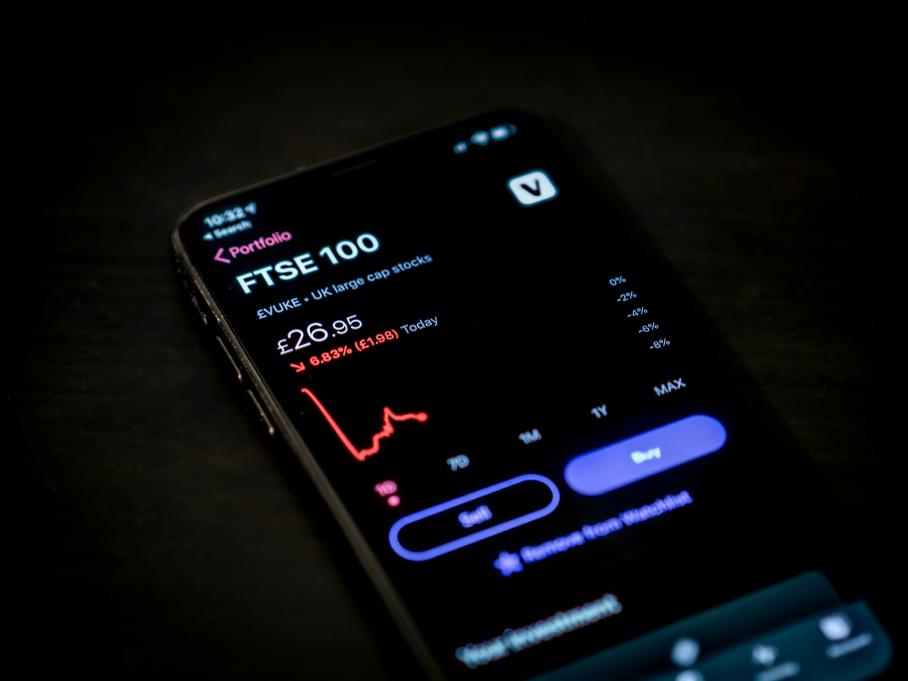
Contrarily, the other side reveals the same dangers associated with traditional sports betting, but magnified on a much more potent scale. By replicating the aesthetics of a stock market or trading app with candle graphs and ticker symbols, these platforms induce intellectual relaxation; traders don’t feel like they’re gambling away their money like in a casino, but rather like macro-investors. The successful financialization of major worldwide events, highly accessible platforms, and fake wins posted by influencers on social media have brought in a landslide of unskilled traders, who are much more likely to waste money on wagers.
The same aggressive advertising performed by sports betting apps such as DraftKings and FanDuel has been reciprocated by prediction market platforms, including Kalshi and Polymarket. Numerous exclusive partnerships and deals with companies, athletes, celebrities, etc., have pushed the boundaries of marketing, while viral social media outreach, especially Polymarket, has totally normalized trading on prediction markets. This exposes every member of society to problems like Gambling Disorder, financial deprivation, anxiety, depression, and possibly suicide.
The core conflict of the prediction market boom lies here: How do we preserve the undeniable utility of crowd intelligence without turning global instability into an unregulated casino? Until federal restrictions catch up with aggressive influencer marketing, the line between highly valuable crowd predictions and large-scale financial ruin will remain very thin. And the same risks that envelop people with gambling disorder will keep circling irresponsible traders on prediction markets.
Support Young Creators Like This One!
VoiceBox is a platform built to help young creators thrive. We believe that sharing thoughtful, high-quality content deserves pay even if your audience isn’t 100,000 strong.
But here's the thing: while you enjoy free content, our young contributors from all over the world are fairly compensated for their work. To keep this up, we need your help.
Will you join our community of supporters?
Your donation, no matter the size, makes a real difference. It allows us to:
- Compensate young creators for their work
- Maintain a safe, ad-free environment
- Continue providing high-quality, free content, including research reports and insights into youth issues
- Highlight youth voices and unique perspectives from cultures around the world
Your generosity fuels our mission! By supporting VoiceBox, you are directly supporting young people and showing that you value what they have to say.