

The Paradox of Connection: How social media is reshaping social connectivity and youth mental health.
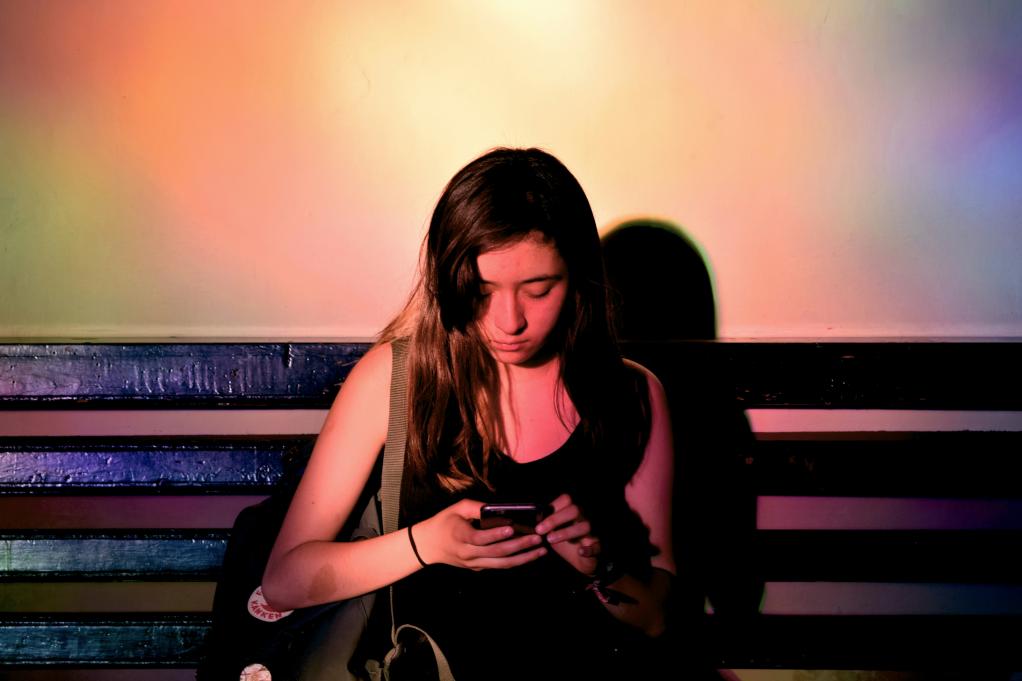
Heads down, thumbs moving left and right, eyes glued to a screen. Be it a classroom, a bus stop, a cafe, these are common and repetitive scenarios one gets to see when they are in a place filled with young people. Social media and its constant connectivity has become so embedded in our lives that it seems difficult to imagine a life without it. This constant digital presence has given birth to a paradox. On the surface, social media paves way for connection and a “global village”. But if we explore the other side of the story, we discover the anxiety, isolation and emotional strain that social media can cause. Being online no longer seems voluntary, but is now simply set as the default condition of social life.
The smartphones’ increasing popularity from the early 2000s onwards has made today’s teenagers the first generation to grow up with access to social media platforms. Previous generations’ socialization came through school, neighbors, and communities. Young people nowadays carry their social worlds in their pockets, which makes them accessible at any given time. Research on university students found that many of them described themselves as active round the clock and would become anxious when they were in a situation where they were unreachable. This constant connection then blurs the line between “on” and “off” with participants in the research comparing the pressure to stay connected with addiction.
Despite having its benefits, social media often brings significant harm by encouraging social comparison. Social media platforms are essentially used to showcase a superficial life, through curated highlight reels, filtered photos, staged achievements, and carefully edited glimpses of a person’s life, promoting a superficial sense of reality. The stories, reels, posts, and even the number of followers people have on social media creates a superficial benchmark of what social life is supposed to look like. The saying “Comparison is the thief of joy, ” pretty much sums up the situation social media has created for young people still forming their own sense of identity. Consequently, when young people compare their own travel stories, their posts and their followers’ count with others, it constitutes a sense of falling behind in connectivity and social presence.
Perhaps the cruelest irony of being born in the age of social media and supposed connectivity is that many young people now report feeling lonelier than ever. The relationship between loneliness and social media, however, is not one directional. A large sum of time spent scrolling on social media is associated with higher loneliness but a large sum of time spent using social media to chat with friends is often associated with lower loneliness. This suggests that the effect depends heavily just on the how and not just the how much technology is used. It was also found that loneliness also works in the other direction, where lonely people are more likely to prefer online interactions over face-to-face interactions in the first place, as they find it easier to be themselves online.
Psychologists reviewing decades of research on technology and empathy concluded that online presence is not harmful or isolating on its own. It tends to strengthen sociability and connection when the offline relationships are secure and strong beforehand and it erodes sociability and connection when it serves as a substitution for a deeper offline engagement. Research also found that people who otherwise have trouble forming offline connections like those with social anxiety, can find a meaningful net positive through social media as even a superficial connection is better than none at all.
However, being chronically online can cause significant problems. Late night scrolling disrupts sleep patterns which are crucial for brain development in adolescents. Reels and videos less than 1 minute, which are really common these days, shorten the attention span while constant notifications fragment it. Bullying is not limited to schools now as the growth of social media has also fed the growth of cyberbullying. Loneliness and cyberbullying reinforce each other with lonely young people more likely to become victims, and victimization in turn deepens loneliness over time.
In conclusion, it seems that neither smartphones or social media are inherently harmful. Digital platforms have proven to be a sustainable way of maintaining connection with friends and family, especially for people from migrant or minority backgrounds who otherwise would have found it very difficult to maintain relationships across borders and distances. The real challenge concerns not limiting screen time itself, but how technology is used; whether it strengthens real relationships or quietly hollows them out.
Support Young Creators Like This One!
VoiceBox is a platform built to help young creators thrive. We believe that sharing thoughtful, high-quality content deserves pay even if your audience isn’t 100,000 strong.
But here's the thing: while you enjoy free content, our young contributors from all over the world are fairly compensated for their work. To keep this up, we need your help.
Will you join our community of supporters?
Your donation, no matter the size, makes a real difference. It allows us to:
- Compensate young creators for their work
- Maintain a safe, ad-free environment
- Continue providing high-quality, free content, including research reports and insights into youth issues
- Highlight youth voices and unique perspectives from cultures around the world
Your generosity fuels our mission! By supporting VoiceBox, you are directly supporting young people and showing that you value what they have to say.