
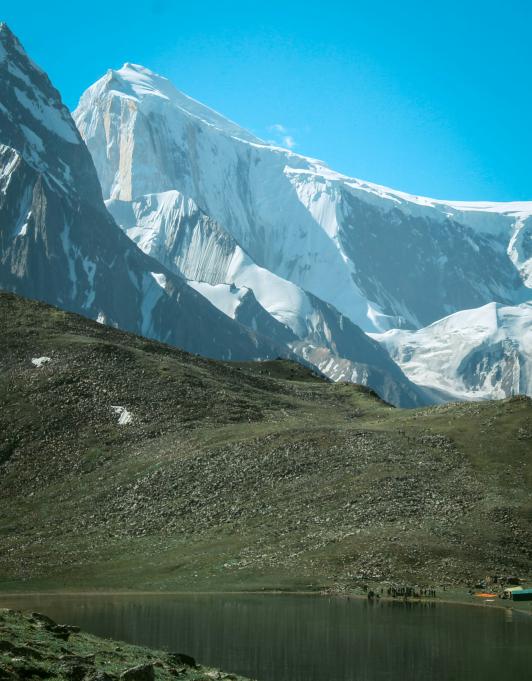
I am from Skardu, a small city town in Gilgit-Baltistan in Northern Pakistan. Most people outside Pakistan have never heard of it. Fewer know that the mountains around it hold one of the largest stores of frozen water on Earth.
Gilgit-Baltistan has more than 13,000 glaciers covering nearly 13,550 square kilometres, the largest concentration of glacial ice outside the polar regions. Those glaciers feed the Indus River, which sustains Pakistan's farming and a large share of its hydropower. For decades, the region has been called Pakistan's "water tower". Today, the water tower is leaking.
The danger has a name: a glacial lake outburst flood, or GLOF. As a glacier melts, the water pools into lakes held back by walls of ice or loose rock. When that wall gives way, water and debris rush down the valley, taking homes, crops and roads with them. In narrow mountain valleys, there is very little time to get out.
The warning signs are getting louder. In February 2026, the Pakistan Meteorological Department (PMD) reported daytime temperatures 3 to 5°C above normal, with the strongest warming around Gilgit and Bunji. According to the Ministry of Climate Change, over 7.1 million people in Gilgit-Baltistan and Khyber Pakhtunkhwa are vulnerable to GLOFs. A ministry spokesperson told New Lines Magazine that 3,044 glacial lakes have been identified in those two provinces, and 33 have a high probability of bursting.
We have already seen what that looks like. In 2022, Pakistan's chief meteorologist said Gilgit-Baltistan had recorded 16 glacial lake outbursts that year, compared with five or six in previous years. That summer's floods submerged a third of the country, killed 1,737 people and displaced more than 30 million. On August 22, 2025, a glacier burst in Ghizer district blocked the Ghizer River. During one summer heatwave, Dawn reported that meltwater from the Baltoro glacier sent a flash flood down the Braldu River in Shigar, eroding farmland and the road to Testun village. In the same heatwave, a flood on the Hunza River swept away transmission lines from the Naltar hydropower station, leaving Gilgit without power for two days. Shigar is the valley next to Skardu.
What makes this harder to accept is who caused it. Pakistan has historically emitted less than 1% of global carbon emissions, yet about 10,000 glaciers in Chitral and Gilgit-Baltistan are reported to be receding. Passu glacier in Hunza became 10% smaller between 1977 and 2014. The people of these valleys did almost nothing to cause the warming, and they are among the first to pay for it.
There is some progress. The PMD's GLOF-II project runs monitoring stations in glacier-fed basins, including Ghundus in Shigar and Hisper Hoper in Nagar. The Gilgit-Baltistan government has created a Glacier Protection Authority, which promises glacier mapping, early-warning systems and better access to international climate finance. Experts speaking to Dawn have called for early flood warnings at village level and hazard assessments across the whole region, pointing out that Gilgit-Baltistan has warmed by 1.5°C, against 1°C for Pakistan as a whole.
Promises are the easy part. A warning system only works if it reaches a farmer in a side valley before the water does, so the money has to reach sirens, radio alerts and trained local volunteers. The countries that produced most of the world's emissions should pay a fair share of that bill. And young people from the region can help in a simple way: learn your village's evacuation route, follow the PMD's GLOF alerts, and pass them on to family members who don't.
Every summer, a little more of that ice turns to water. The question is whether we prepare before the next lake bursts, or count the damage afterwards.
Support Young Creators Like This One!
VoiceBox is a platform built to help young creators thrive. We believe that sharing thoughtful, high-quality content deserves pay even if your audience isn’t 100,000 strong.
But here's the thing: while you enjoy free content, our young contributors from all over the world are fairly compensated for their work. To keep this up, we need your help.
Will you join our community of supporters?
Your donation, no matter the size, makes a real difference. It allows us to:
- Compensate young creators for their work
- Maintain a safe, ad-free environment
- Continue providing high-quality, free content, including research reports and insights into youth issues
- Highlight youth voices and unique perspectives from cultures around the world
Your generosity fuels our mission! By supporting VoiceBox, you are directly supporting young people and showing that you value what they have to say.