
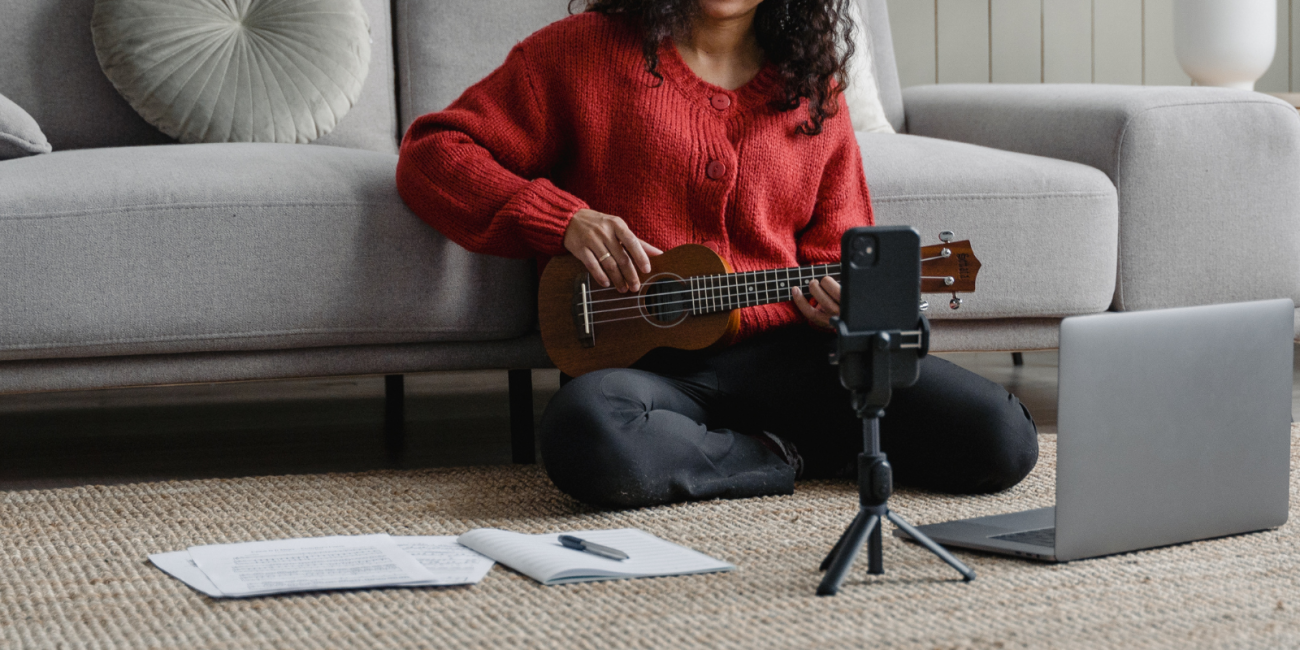
I am hesitant to write this at all, which I think is probably a sure sign it needs to be written. Like many musicians, I have to resort to TikTok as a means of promotion, to varied successes. The highs are incredible: when one of your songs resonates with someone who would not have heard it otherwise, it’s like lightning striking. On the other hand, you are one of millions of musicians and creatives and microcelebrities and influencers desperately trying to make some sort of impact. It’s intensely demoralising to spend hours on a video only for it to be smothered in the omniscient power of The Algorithm.
Still, I haven’t done badly. I haven’t done well, but I haven’t done badly. Occasionally an arrow will strike true. There are a few die-hards who, for the most part, are kind and keep a friendly distance. Except one. Initially, it was normal enough, just a lot of compliments on my outfits, my hair. Strangely, not much on the music. Over time, it got more consistent, more bizarre, more consistently bizarre. A comment on every video: some borderline nonsensical as to provoke any response, some overly familiar. The latter comments would make my heart race. Oh, I just love looking at your face. Or should I drive down to see you? It’s only three hours. It wasn’t just me, either. I started noticing the same comments in other musicians’ comments. Always other young women. Always a similar genre - soul-baring singer/songwritery stuff. It became so common, I conducted an experiment by looking up the term ‘UK singer songwriter’ in TikTok’s search bar. One out of three of the women listed had the same person making the same overfamiliar comments. While there was nothing sexual, at least overtly, about the comments, I felt deeply uncertain. Following suit from other creators who, largely, seemed to ignore them, I stopped engaging. It did nothing, except to fuel the intensity of the comments. Every video, within minutes sometimes. Sign my heart. Please sign my heart.
There is an inevitability to a response like this. Not because I’m a big-shot, or because I am so unbelievably gorgeous no person could help themselves from doing otherwise upon coming across my music. Stan culture has reached a fever pitch since the confines of lockdown, and on a platform like TikTok, the veil between audience and creator is thinner than ever, because you are a normal person looking at another normal person. Relatability is desirable above all else - why else would there be millions of what I eat in a day videos? Millions of day in the life vlogs, of read with mes and all-too-intimate storytimes. A level of parasociality is to be expected if you, like me, are a musician trying to build fans. Fandom is inherently parasocial, there’s no escaping it, but by putting myself online, I feel as though I have surrendered my right to set a boundary, signed off on my whole being for consumption. Perhaps the comments were one of thousands, it would be white noise, or the distance would have grown so far between me and them that my heart wouldn’t race anymore every time they appear. I’m not a celebrity, by any means. I wouldn’t even consider myself a niche internet microcelebrity. I am a person, and there is another person who feels far too close to me, separated as we are by hundreds of miles.
It culminated, then culminated again. I had spent a long time working on a demo and accompanying video and, naturally, uploaded it to almost no reception, par the usual comment from my number one fan. It was different from the others, though. They had screenshotted a frame of the video, of my face mid-word, mouth in a wide O. 'New reaction image', they said. I felt disturbed, more so than before. My face was now in their photo gallery. Did they have other screenshots of me? In my room, mouth open, vulnerable? The videos were public, obviously. I had been the one to set them free into the world. Except now they had run too far, landed in a dangerous place. It felt sinister. I felt watched beyond my control.
Not responding, I tried not to let my thoughts stray to darker places. In all likelihood, it was an innocent joke, but I still erred on the side of caution. An attempt was made to softblock, the kinder, gentler way to keep a person at arms’ length. Within hours, they had refollowed me. A month passed, and I was scrolling late at night when I came across another young female musician’s video, mindlessly trudging through the comments when I stopped short. It was that picture, the screenshot of me, open-mouthed. I did not know this woman, I had simply stumbled upon it. For god’s sake, she had tens of thousands of followers. The comment, my face, had multiple likes. My stomach sank. How many more comment sections had this picture made it on to? It shrank me. That video I had spent so long on reduced me to a meme. For the first time, I started drafting a reply: please do not use my face as a reaction image. I did not know you would use this screenshot in other people’s comments. Friends were split - be polite, tear them to shreds, learn to expect this. I opted for politeness, out of self-preservation more than anything. They had taken it down by the time I had woken up in the morning.
Chappell Roan caught a lot of criticism last year for arguing her right to privacy from her fanbase. Her opponents suggested that, by reaching global-superstar levels of fame, she had willingly signed off on any right to a life. Expecting fan interaction and accepting anything that is thrown at you are entirely different things; sharing a side, not all, of yourself should not equate to making yourself public property. Our concern often lies with how much we are influenced by influencers, but the audience holds immense power, they always have. Oversharing delights. Vulnerability is popular, but I don’t regret setting a boundary with the commenter, as detrimental as it felt to my own success. The comments have not stopped, of course. There’s a thrill for them, I think, an element of play. By not engaging, it becomes a matter of discovering what exactly will draw a response. I won’t be giving them the pleasure.
Support Young Creators Like This One!
VoiceBox is a platform built to help young creators thrive. We believe that sharing thoughtful, high-quality content deserves pay even if your audience isn’t 100,000 strong.
But here's the thing: while you enjoy free content, our young contributors from all over the world are fairly compensated for their work. To keep this up, we need your help.
Will you join our community of supporters?
Your donation, no matter the size, makes a real difference. It allows us to:
- Compensate young creators for their work
- Maintain a safe, ad-free environment
- Continue providing high-quality, free content, including research reports and insights into youth issues
- Highlight youth voices and unique perspectives from cultures around the world
Your generosity fuels our mission! By supporting VoiceBox, you are directly supporting young people and showing that you value what they have to say.