
What is 'Brain Cancer Justice'?
There's a new movement that is reshaping conversations in the cancer space, called Brain Cancer Justice (BCJ).
Brain cancer patients, bereaved families and their wider communities are taking innovative action by directly holding politicians to account when it comes to the government’s commitment to brain tumour/cancer research.
Why exactly are they calling for justice for Brain Cancer patients?
Brain Cancer is actually the biggest cancer killer of under 40s, which includes children. And despite this, it has received a mere 1% of cancer research funding since 2002. Which is actually the year I was born 24 years ago…scary.
The UK-wide picture
Brain Cancer has a (UK) survival rate of 12-13% over 5 years. And treatments haven’t changed in around 40 years.
Interestingly, survival rates differ across the world. The UK ranks 22nd out of 29 comparable countries, which personally came as a shock, considering how highly the country has been painted as a global leader in many respects.
Why? We are yet to know. But charity OurBrainBank states that “questions are being asked as to why the UK is falling behind countries like the US, and it has been suggested that a lack of access to innovative treatments and opportunities to join clinical trials for UK patients may explain this.”
Circling back to the research funding, there have been promises to change this, such as in 2018, after the passing of Tessa Jowell, a former British parliamentarian who died of Glioblastoma (stage 4 brain tumour/cancer). Her mission saw a pledge of £40 million to be passed into brain tumour research within five years. Over seven years on, and that figure still hasn’t been hit.
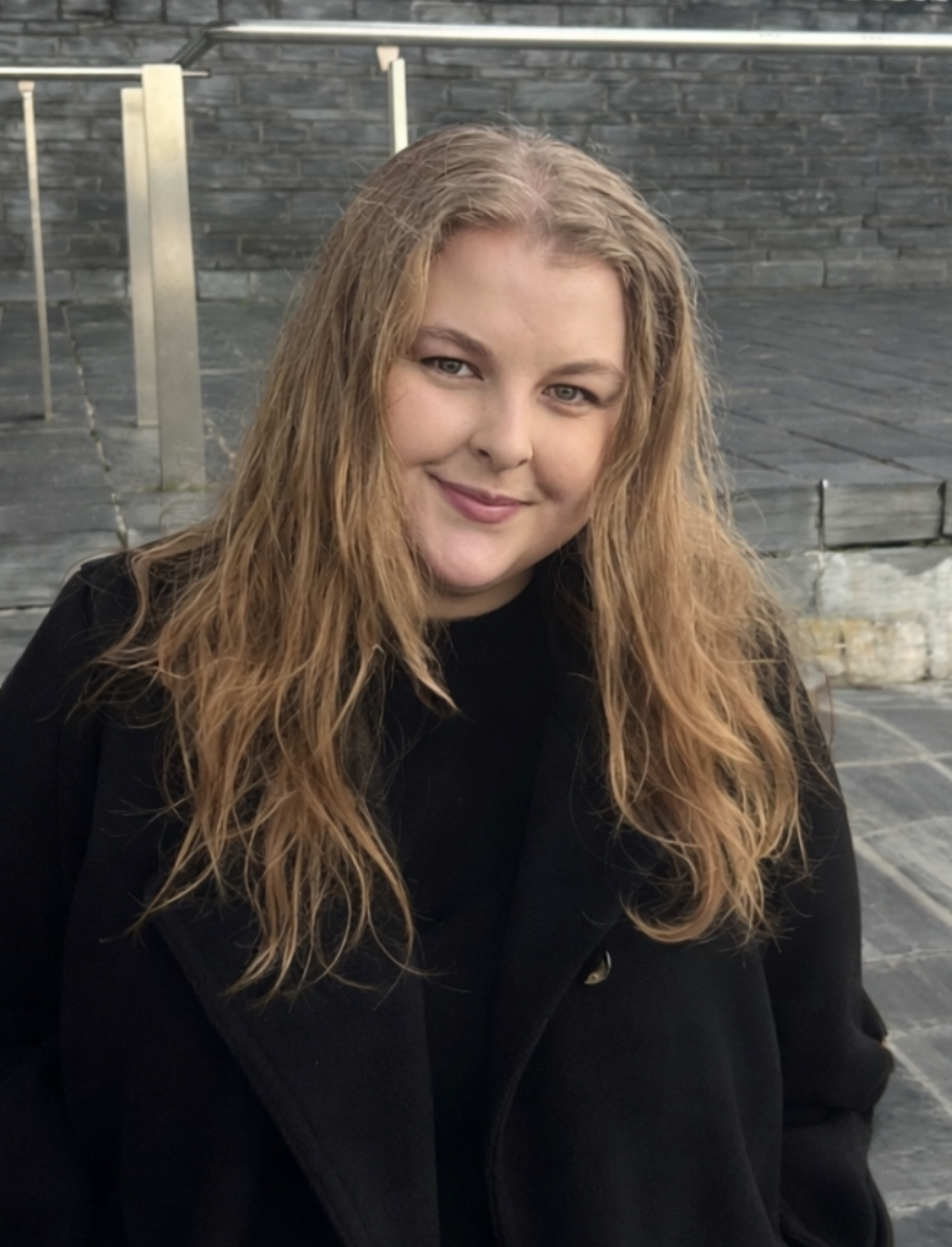
So, in comes Brain Cancer Justice (BCJ). This matter means a lot for me as a person living with a low-grade brain tumour that is inoperable, and losing many friends to their brain tumours, both high and low grade.
This one is personal
I use my social media pages to document my journey after my diagnosis and raise awareness for young people living with illness, especially young women like myself.
I know all too well the lack of options and out-of-date treatments there are, as well as how little research has been done into brain tumours. It is believed that 97% of brain tumours are unpreventable, according to The Brain Tumour Charity, and the cause of brain tumours is yet to be discovered due to a lack of research.
Back to the campaign…
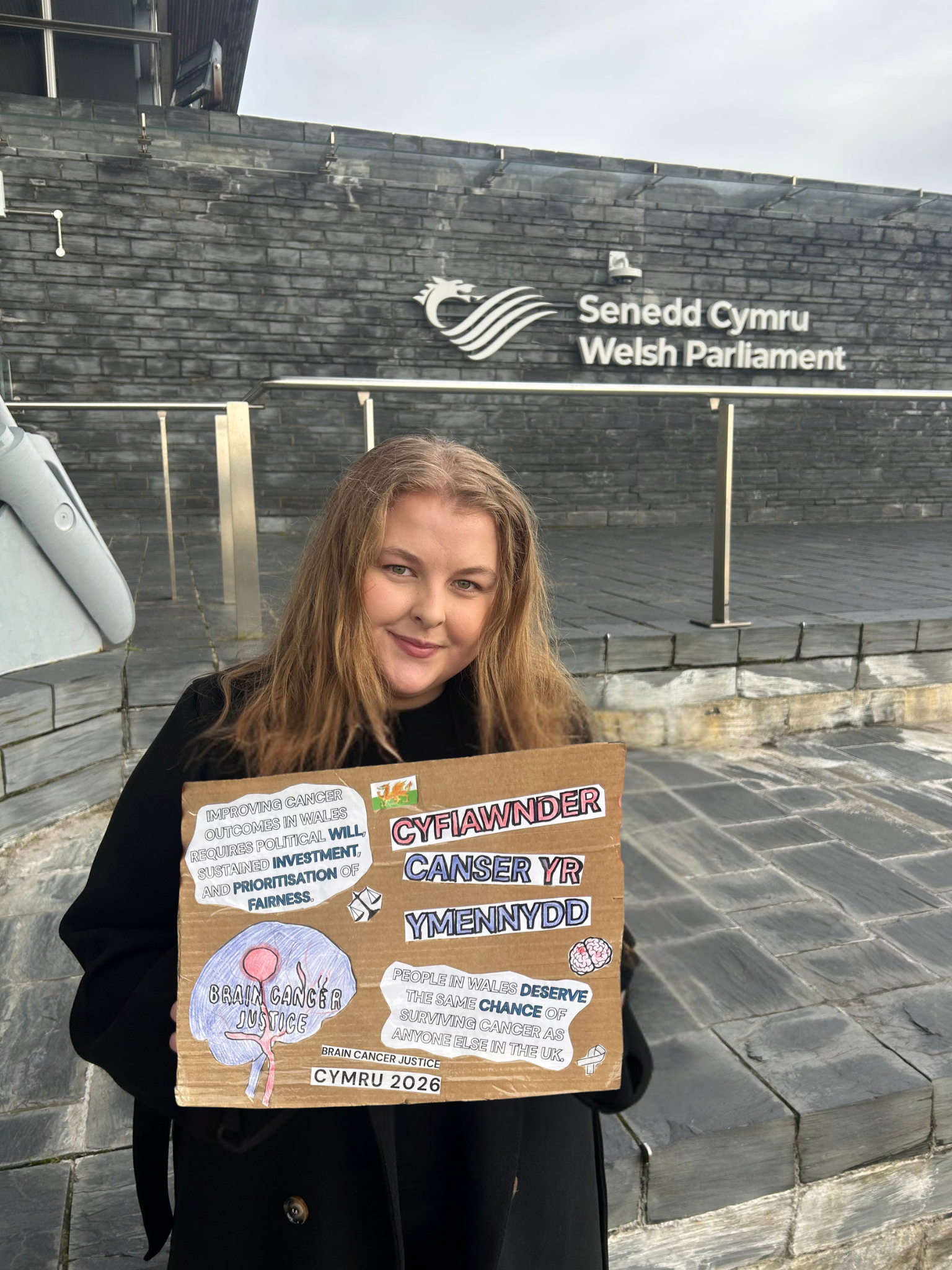
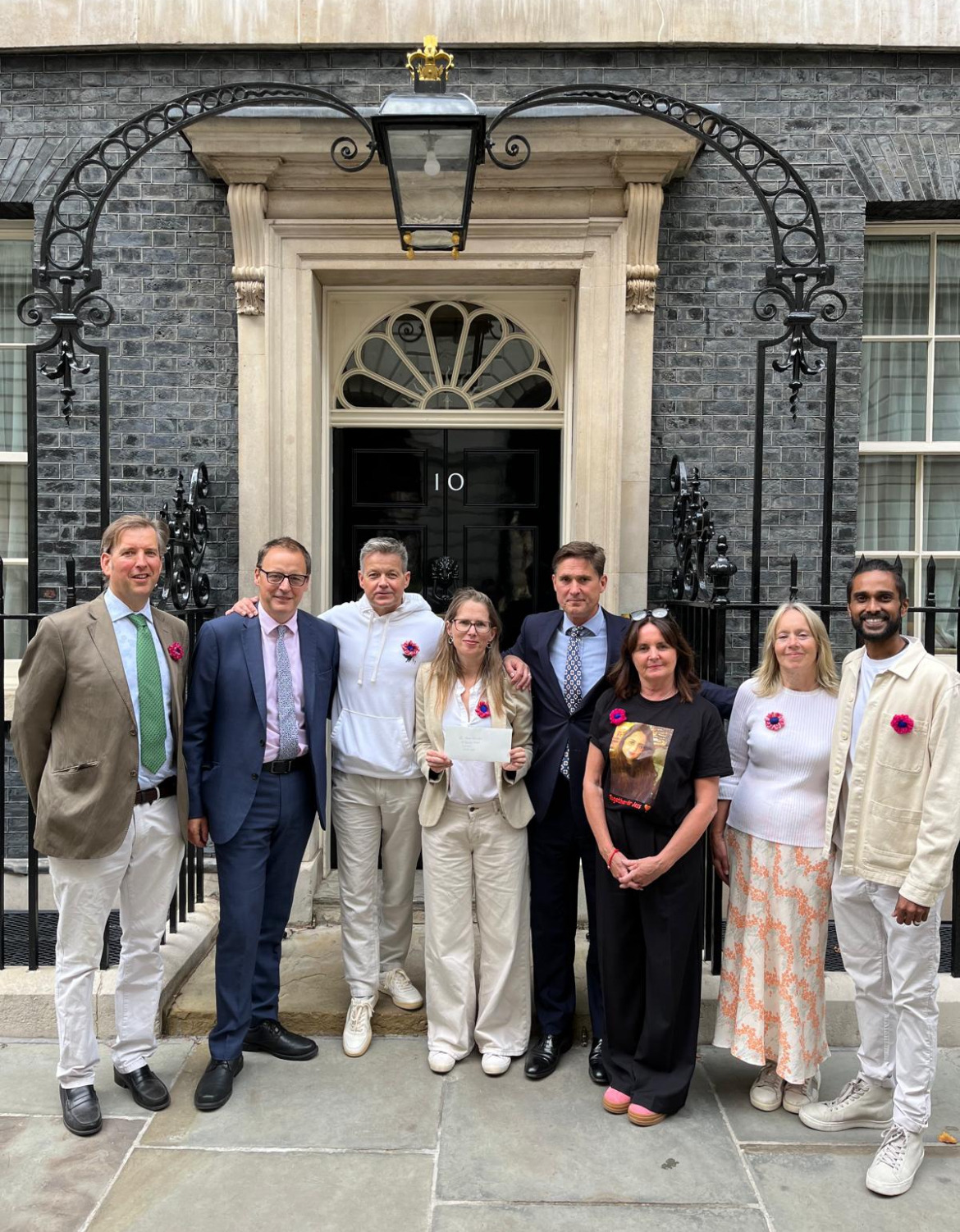
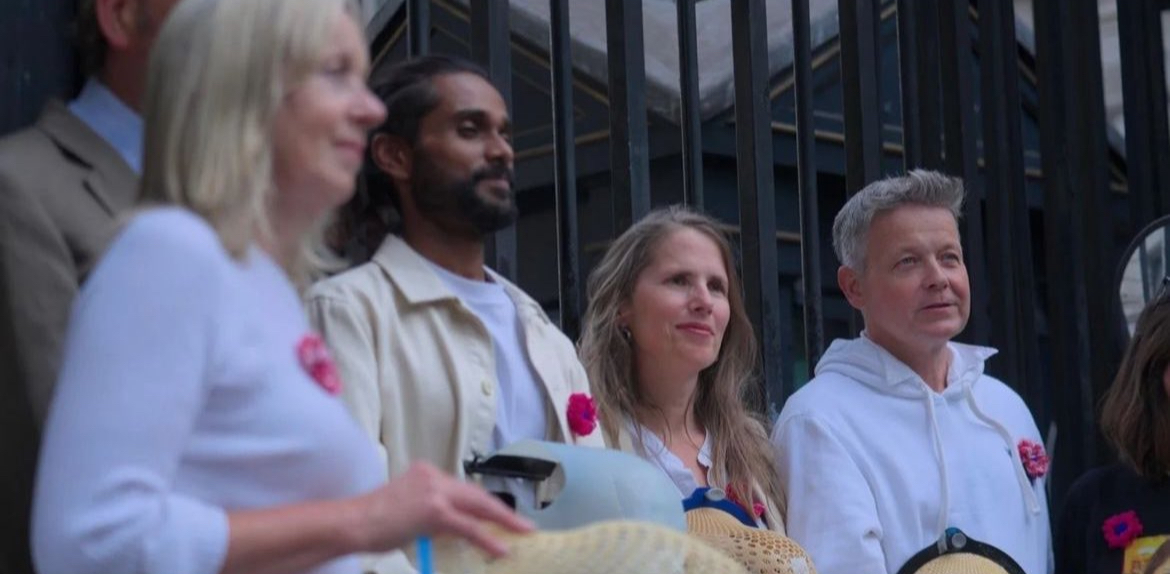
On September 9th, the BCJ team took to Westminster with their radiotherapy (a type of treatment using radiation to damage or kill cancer cells) masks and pictures of passed loved ones, and have since been to Edinburgh. They plan to go to Wales in 2026 and continue to cover the UK, calling for justice, and have already made an appearance recently during Less Survivable Cancers Week (12-19 January 2026). 'The Banshees' make an appearance across major UK-wide cities to make a statement and raise awareness of the realities and social injustice faced by families impacted by this disease.
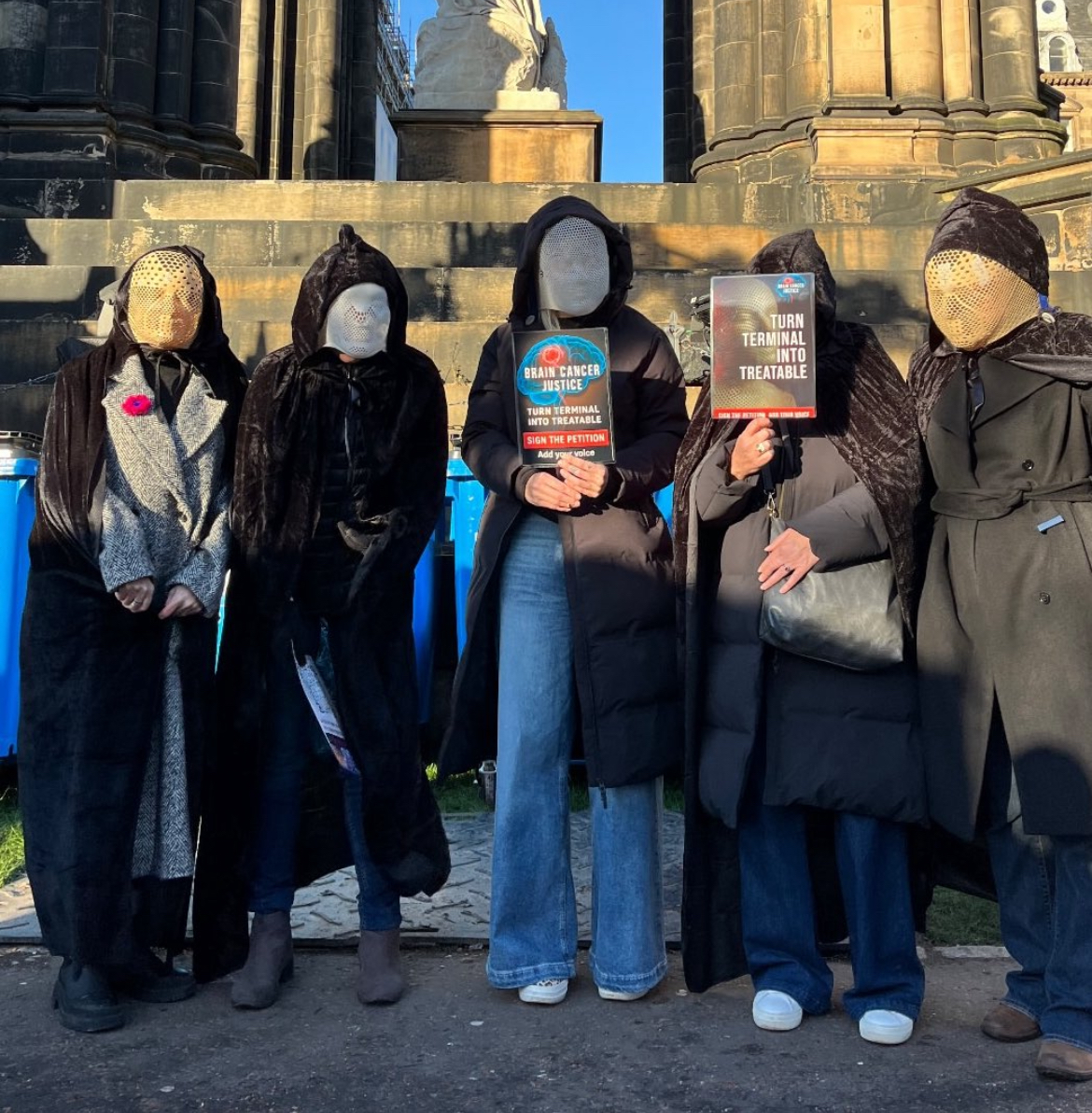
The Brain Banshees in Scotland
I had a chat with the Chair, Georgie Maynard, who lives with Glioblastoma (stage 4, with a 12-18 month prognosis and survival rate of 5% over 5 years), to ask why this campaign purely for justice was set up:
"After attending a few parliamentary groups, it became abundantly clear the deep frustration that sits amongst brain cancer patients and their families. A decade ago, there was a compassionate, strongly supported debate in Parliament, with Helen Jones, a previous MP, highlighting the challenges facing brain cancer patients. So, what’s changed in 10 years? For glioblastoma patients (like me), absolutely nothing! Unless, of course, you can put your hand in your pocket, head overseas and fund private treatment."
"This is not the NHS set up by Bevan and Attlee in 1948, it is not providing justice to brain cancer patients, and it is not acceptable to see so little action in the cancer that kills more children and adults under 40. Come on! We don’t even know who will get it next, but we do know this cannot be ignored any longer. That’s the role of the BCJ is to raise awareness, shout louder at the Government (as suggested by their own member Ashley Dalton MP) and focus on where change is desperately needed: access to trials, to treatment, to genomic sequencing, vaccines, repurposed drugs, tumour treating fields, Car T-cell therapy, and, equitable access to patients across the country."
Georgie asked me to add that BCJ is not a charity and is not seeking donations, but is seeking action by collaborating with charities, MPs, and campaigners to ensure the patients' voice is heard.
What Does the Campaign Aim to Achieve?
A current parliament petition – with over 40,000 signatures and climbing - asks for better research funding to speed up discoveries and potential trials, but also calls for what they label a ‘Right to Try’.
The ‘Right to Try’ consists of the options of:
- genome sequencing (the process of determining the order of the four chemical bases (A, T, C, and G) that make up an organism's complete set of DNA)
- trials (studies that could be the next medical treatment, that patients can join as part of their research)
- immunotherapy (a cancer treatment where the immune system itself is key, teaching it to recognise and kill these abnormal cancer cells)
- repurposed drugs and vaccines (using medicines and treatments already used for other diseases and finding out if they can be used for brain cancer too)
The petition has until March 2026 to reach 100,000 signatures, which could mean the matter is debated in parliament.
As a person living with a brain tumour, I’d like to thank this amazing group for facing this difficult topic when so deeply impacted and fighting for this community. Best of luck!
Support Young Creators Like This One!
VoiceBox is a platform built to help young creators thrive. We believe that sharing thoughtful, high-quality content deserves pay even if your audience isn’t 100,000 strong.
But here's the thing: while you enjoy free content, our young contributors from all over the world are fairly compensated for their work. To keep this up, we need your help.
Will you join our community of supporters?
Your donation, no matter the size, makes a real difference. It allows us to:
- Compensate young creators for their work
- Maintain a safe, ad-free environment
- Continue providing high-quality, free content, including research reports and insights into youth issues
- Highlight youth voices and unique perspectives from cultures around the world
Your generosity fuels our mission! By supporting VoiceBox, you are directly supporting young people and showing that you value what they have to say.