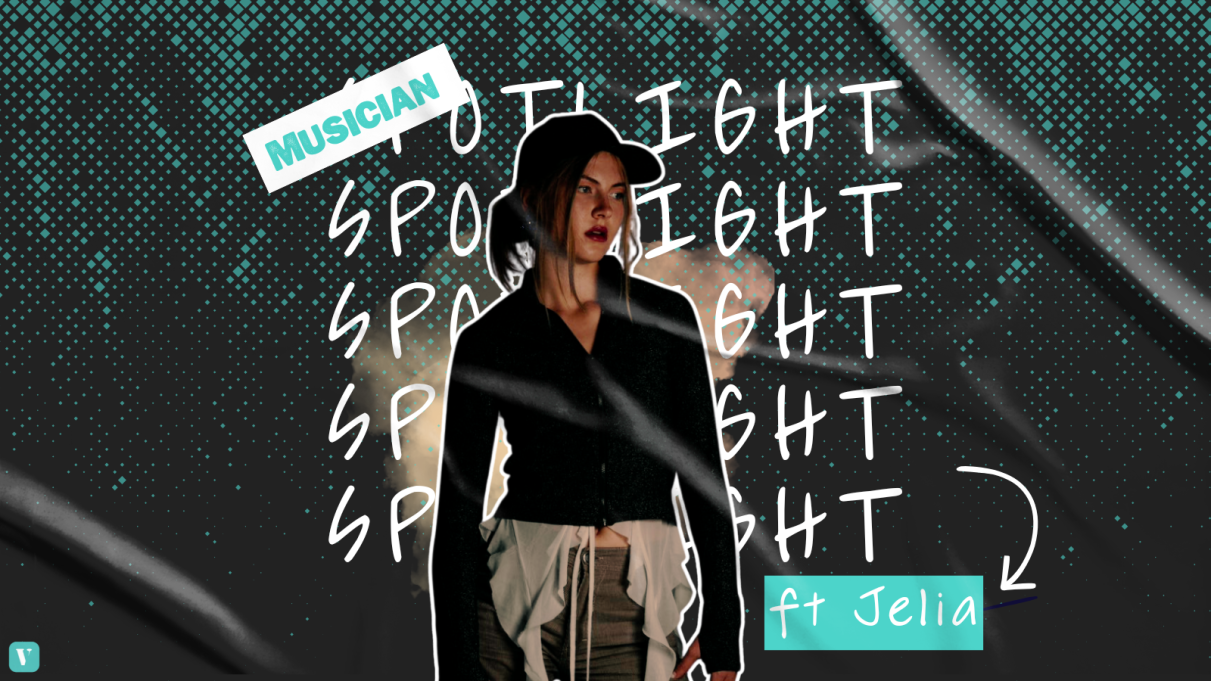
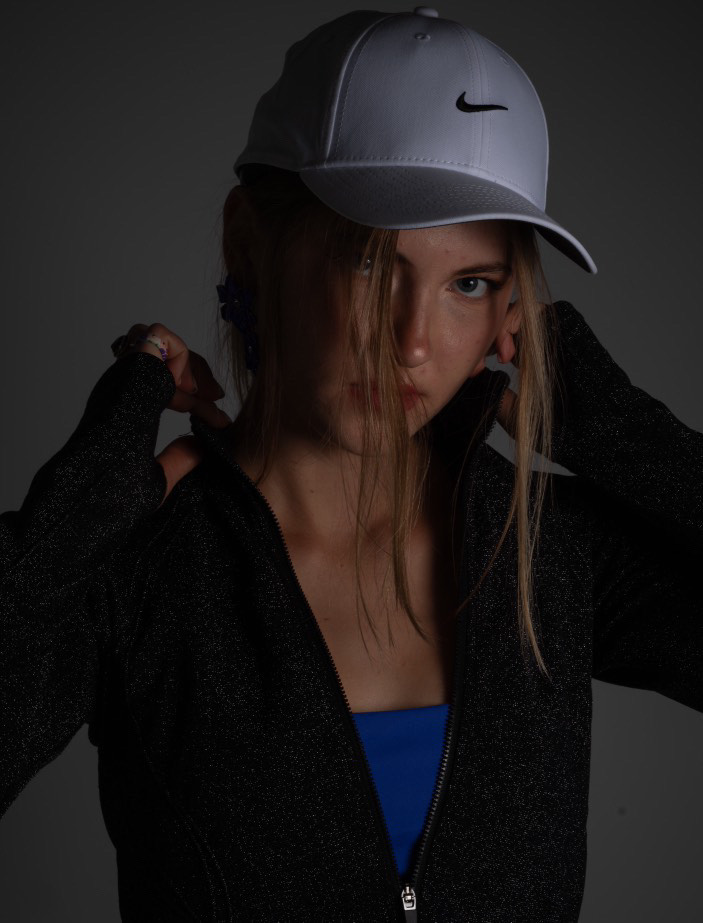
From switching courses on a whim at BIMM University to securing award nominations and features on BBC & Netflix, Jelia’s fearless approach has taken her from festival stages with Amazon Music and BIMM to working alongside some of the industry’s greats. She’s quickly building a reputation as a force to be reckoned with.
2026 brings a new adventure, opening a studio in her hometown to support, educate and connect musicians of all levels, all while continuing to write and produce her own music.
Interview conducted by VoiceBox's Lauren Louisha

Hey Jelia, thank you for joining me today. It's a dream to feature you! For those who don’t know you YET, can you give them a rundown on all things Jelia?
I started releasing music about five years ago, and I formed a band after the pandemic. We played a lot in London, and I kept on releasing music, just trying to get out there. Now I’ve graduated with a songwriting degree from BIMM London.
I spent a lot of time in the studio, and I learned a lot from other producers. I was very curious about everything they were doing, and eventually I did training for sound engineering before pursuing a degree.
Now I'm launching my studio in Warsaw, so that's really exciting. I do want to release more music of my own, but right now I’m focusing on the production. I just launched my new website as well.
What was it that made you take the leap into studying music at BIMM rather than a more traditional academic subject at UCL?
Honestly, it was really spontaneous because at first I wanted to study philosophy and psychology, and I applied to four reputable universities. I even got into two or three of them. I was in between choosing, but then I had an interview with BIMM.
It was funny because I wrote a personal statement for philosophy and psychology, for those other universities, and before my interview with BIMM, I told them that’s the only one I had. They wanted to read it, but once I passed the interview, I never actually had to send it over. I always found that funny. My decision to go to BIMM was just impulsiveness, I suppose, because why not? I'm just going to jump into the deep end.
Then obviously the pandemic started, and I was doing a vocal course, but singing through masks wasn't really the vibe. So I switched to songwriting, and it was way better. I met multi-talented people, which was super inspiring. I hadn't really written songs before starting the course, only two or three, which I had to submit to get the degree. It was random, but I’m super glad. I guess the rest is history.
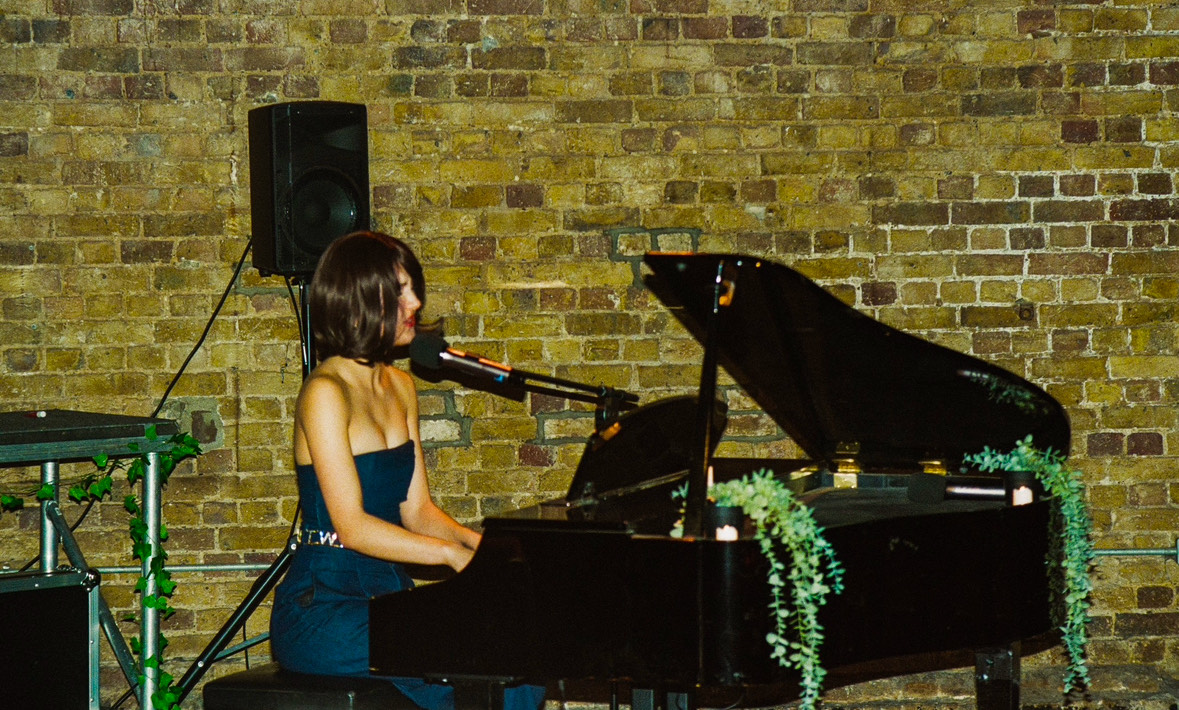
How did your time at BIMM prepare you to navigate the music industry?
I think it was great at connecting us with a variety of people. Obviously, you have the benefit of having a popular music-only space with a few thousand like-minded people. On campus, everybody is either studying music, journalism, music production, music marketing or popular music performance. So, you're just in this bubble of people who want to be in this world. They also run lots of amazing collaborations with companies that want to shed light on what's happening in the industry. So you get quite a bit of insight.
What you make out of it and what you put in is important too. If you're too busy to focus on going to all those extracurricular classes, it doesn't really help that much. I get that some people want to treat it like it’s 'just a degree,' but it should be more than that.
Your music is everywhere, from Netflix, US TV shows and BBC 1! What advice do you have for musicians wanting to be heard on these platforms?
Appearing on BBC radio took some time. I uploaded maybe five songs before they chose one, and I've heard similar stories from my peers.
Effort and consistency are important because you never really know when it's your turn. It's really competitive, but you never know who's going to review your music.
I got on the BBC because I got into the sync world a little bit more. I've done some songwriting camps with my publisher, and that was what brought those opportunities. It was the same with Netflix.
So you're currently going through a full-circle moment, moving back to Poland to explore your roots. How are you hoping to implement what you learned here, over there?
I was always fascinated by how different Western music sounds. In Poland, they focus a little more on the rawness, and they don't care much about mixing and mastering. It's more about a good performance, raw emotion in your voice or in a little guitar solo.
I think in Poland, the emotions come from the imperfections, whereas in England, everything is a little bit more polished, and people really strive for perfection. I was also really fascinated by the difference in production and writing lyrics in a foreign language. I always loved writing in English because I think it's so flexible, it's just perfect for writing songs.
I'd love to start writing in Polish even though I find it difficult. The Polish language has a lot of harsh consonants and long words. That's the biggest obstacle because when you have shorter words, you can kind of mould them. English is very singable, whereas I used to like Polish poetry more than English because I felt it fit me.
Also, I would say production in Poland has a different approach and different techniques that are really up there; they're really creating a wave of modern sounds. I want to kind of merge the production techniques with writing in Polish, but we'll see how that goes.

What are the differences you’ve noticed between the music scene in London and Poland so far?
So, first of all, there's a big rap scene. I think most countries have their own rap scene, and that's not really my thing. I love how London really explores R&B and soul; that's really my part.
But also, the Polish scene is still a little bit more conservative. There are still a lot of sound engineers who are just obsessed with how it used to be done in the times of Pink Floyd, and how that was the ‘golden times’. They think today’s music is ‘trash’, so they can't really appreciate it or the new technologies.
Obviously, it depends on the person. There are quite a few incredible producers that are smashing it, and there are also those that are really stuck in their ways.
At the moment you’re working on developing your production, what's something you’ve learned so far that you didn't know in the beginning?
In production, you can always learn something new. Every time I work with another producer, I've learned something. It doesn't matter what level you are; there's going to be a little shortcut you didn't know or a different technique that you never used.
It's really fun because no university will ever show you all of that; they just show you the basics. You have to figure out everything else.
I didn't know anything about production before 2020, and at first, it was really difficult because figuring it all out was a long process. But the excitement to work with everyone and the curiosity took over and made me go for it.
Let's talk about your studio a little bit because it's not just a studio. It’s not just a business, it's a whole new journey. So, what made you want to start up the studio? And why over in Poland and not London?
At first, I did have one in London, and that was for around six months. I've worked with quite a few artists over there. Then the tenancy was ending, and the owner wanted to sell the place; there were quite a few coincidences that impacted my decision.
But I was always curious about working in the industry in Poland, and now that I’ve moved here, I get to explore it. The studio’s open now, and it’s bigger and has more equipment than before. It’s located in my hometown. I'm really excited to see how it grows.
Being present on social media is now unavoidable for anyone wanting to get their music heard, it seems, but many people aren’t happy about this. What are your thoughts on it?
If you started recently, I don't think there's a way around it, unless your target audience is an older demographic that still buys CDs. I do know people who just attract older audiences; they're usually older themselves, and they've been in the industry for a long time, and they're just fine. People don't necessarily have to get on TikTok if they don't want to. It probably won't hurt, but then I don't think everyone is made for TikTok anyway.
I know it's super difficult, and I struggle with being consistent. When I’m super busy with shows or doing songwriting workshops, people I worked with would post for me. I would just send them my picture, and they’d make a collab post. That was just awesome. I had it for a few months straight. It looked like I was consistent, but in reality, I wasn’t.
I know there are massive stars that have a team doing their social media, because they also struggle with that presence. Some have periods when they're not on social media; it's a struggle for everyone, really.
I think there are very few people who are naturally inclined to be influencers. I do have a friend who's a singer, but then she pivoted more towards the influencer sphere, and I can see that she does so much better than an average person with posting. And I think a part of it is also overcoming yourself by just doing it, and not putting so much emotional baggage on that action itself.
People are super scared of being cringe, and it’s easy to overthink every little word, the description, or the frame of a picture; it is a lot, but social media is definitely an amazing tool.
If you know how to leverage social media, it can be amazing. So many people have incredible success stories just because they started being present and got creative with their content. If you just follow trends, you're probably not going to be the biggest creator, but if you're being creative and have done something that others haven't, you might just be the next big thing.
Thank you for sharing your story and journey with me! Before I let you go, can you share one piece of advice for musicians navigating the industry?
Definitely collaborating! I'll do a little self-promo here because I'm going to run another songwriting camp at the end of March, and I've done one previously in London. The next one is going to be in Warsaw, and we plan to have international rooms as well.
To be honest, every time somebody asks me about the last piece of advice, I usually say collaboration because I just do genuinely think it's true that the best music is usually written by several, or impacted by several, people. As much as it's great to do it all by yourself, learning every skill in music alone is just impossible.
Support Young Creators Like This One!
VoiceBox is a platform built to help young creators thrive. We believe that sharing thoughtful, high-quality content deserves pay even if your audience isn’t 100,000 strong.
But here's the thing: while you enjoy free content, our young contributors from all over the world are fairly compensated for their work. To keep this up, we need your help.
Will you join our community of supporters?
Your donation, no matter the size, makes a real difference. It allows us to:
- Compensate young creators for their work
- Maintain a safe, ad-free environment
- Continue providing high-quality, free content, including research reports and insights into youth issues
- Highlight youth voices and unique perspectives from cultures around the world
Your generosity fuels our mission! By supporting VoiceBox, you are directly supporting young people and showing that you value what they have to say.