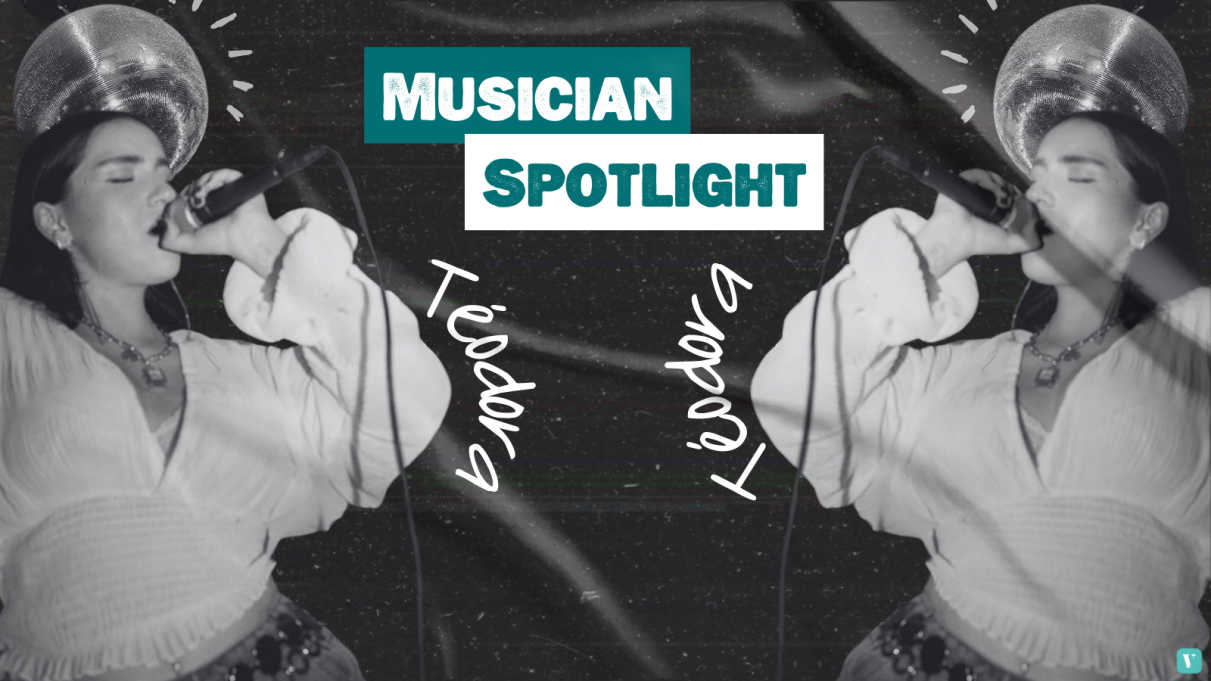
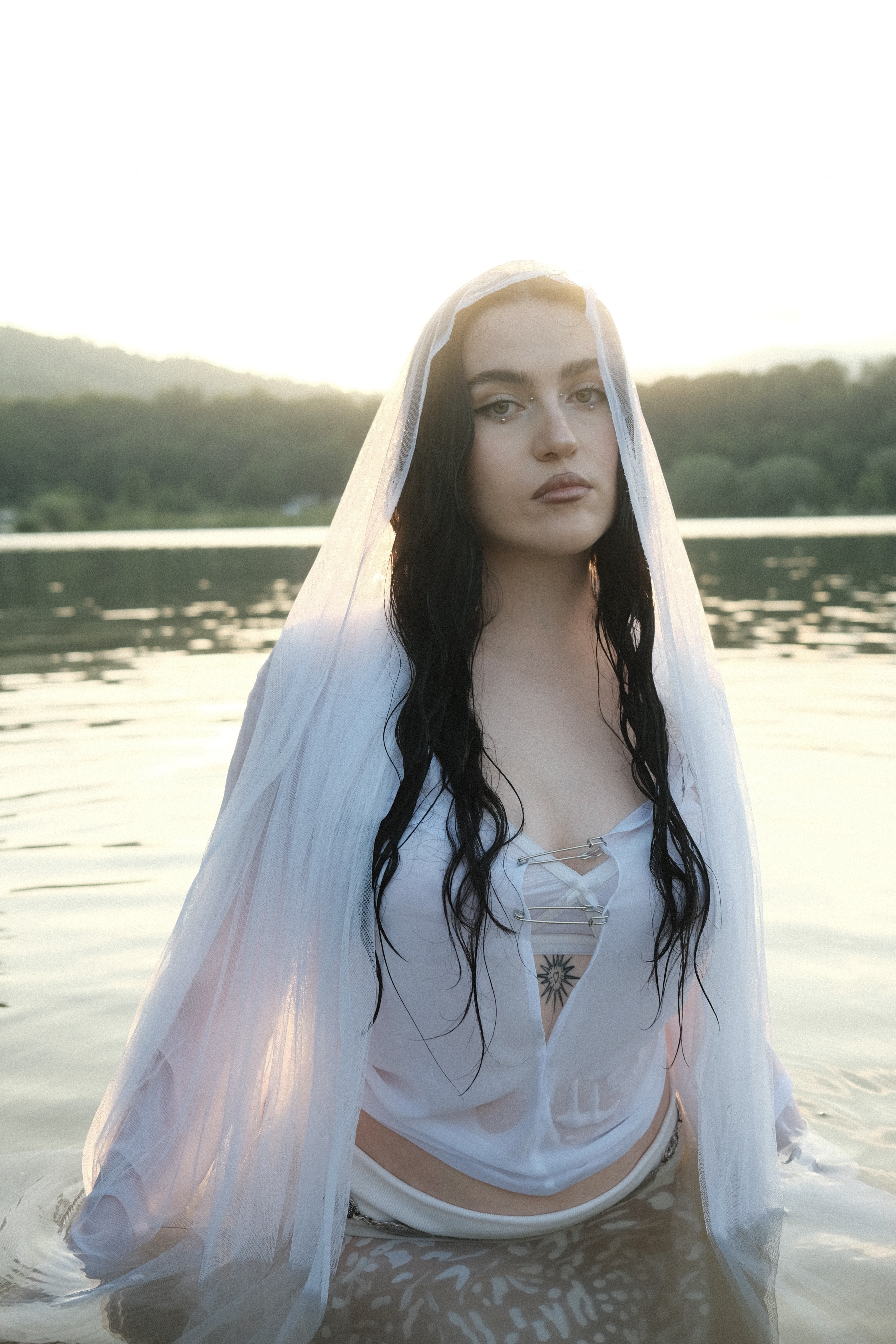
Rising star TÉODORA is quickly becoming known for her blend of dark pop, R&B and her Balkan roots. Her cultural influences and trap production not only set her apart from her peers, they create a complex and distinctive listening experience.
TÉODORA is no stranger to the stage, playing iconic venues across the UK and Romania, leaving her audiences in awe when her flute makes its entrance. Her vocals are powerful, raw, and her lyrics match that; they're honest, vulnerable and allow listeners to feel safe within them. Each release, she pushes her creative boundaries and makes us wonder, what's next?
Interview conducted by VoiceBox's Lauren Louisha

Hi TÉODORA, it’s great to have you on VoiceBox! When you think about who you are as an artist, your sound, your energy, your story, how would you describe all things TÉODORA in your own words to someone just discovering you?
TÉODORA is different from my personal self, right? the artist. TÉODORA is a very sensitive but also confident artist who's blending multiple genres such as dark pop, R&B, soul, vocals and trap production, but recently Balkan influences because she's very homesick. When she moved to the UK, she realised that her culture is amazing, but nobody knows about it, and she has to speak about it more in her music. So that's what she's doing now.
I love blending darkness with vulnerability, but also, if you would ask me what my favourite colour is, it’s pink. I would just never wear pink. But I love pink so much. I just love this contrast. Same in my music and my branding. I'm just a soft person, and I like that. And I'm not afraid to talk about that in my music either. I like to have a darker side to my style, to my appearance. I feel like it's a sort of layer of protection, to be honest with you, and it’s from my Eastern European background as well.
Has your current sound been influenced by your classical and jazz training?
Definitely! I studied classical music for eight years, and I play the flute; I always play it at my live gigs as well. I’ve added it into my production; it's so easy now as a music producer to understand all those influences and get a different perspective on what chord progressions you can do - what instruments blend.
And this is why maybe I love listening to old genres right now, or the respect I have for Rosalia's album, for example. We should bring these kinds of old genres that people consider lazy, maybe especially the new generation, cuz they're so complex and so beautiful, and nobody on this earth can tell me they don't like classical music. You may not listen to it every day, but look at Playboy Carti when they add strings or a live guitar either in live gigs or their actual production, it’s so so good. Just adding these elements to modern music, I feel it's amazing.
And jazz, obviously, I studied jazz for three years, and it helped me with my singing technique because I got to a point where I can sing every genre, and jazz has definitely had its contribution because it is actually extremely complex, and it's coming all from creativity.
It's not that you have to study that specific phrase; you have to study that specific riff. It literally trains your brain to be really creative. So now if you put me in a jam when I have to improvise, I'll go crazy. Put me in that space. I love improvising. I love all kinds of adlibs and everything like that. And I feel like that's because of jazz music.
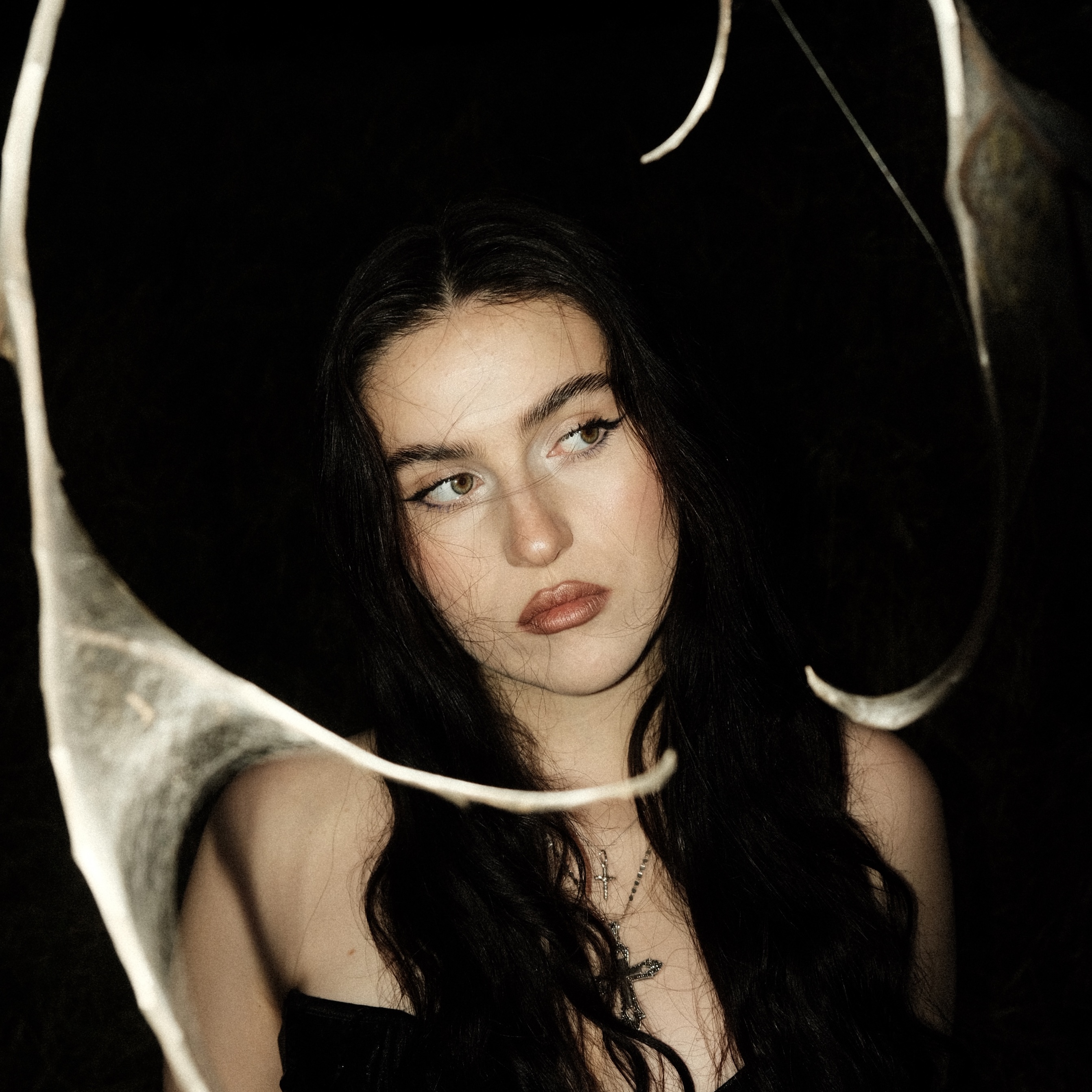
You moved from Romania to London to pursue your career in music, what are the personal and professional changes you’ve noticed since making the move?
When I moved to uni, where I studied music business, everything changed, in good and bad ways, but London is not really for the weak. I don’t think that because I'm coming from a tiny town somewhere in the mountains. I lived in Bucharest, I had a little feel of a capital, but London is much bigger and much crazier than any other capital in Europe.
At the beginning, it was easy because everyone around me was in the same kind of position, like, "we're all alone here. Haha, we're broke. Yes, that's okay,” But I guess after I finished it, reality hit, and I was like, "What am I doing with my life? I graduated. I have no excuse now. I have to be an adult."
That moment changed me so much. I was so shy at the beginning, I was only going to networking events, and all that stuff that you need to do as an artist, with a bunch of friends. Sometimes I do depend on people; I can't just do things alone. And that's what I learned, I learned to be alone and to enjoy it in London.
I also finally discovered my sound and what I love. I've discovered that I don't have to be the next Taylor Swift to be liked. I found my own identity, I have my own sound and my own brand, and I'm happy about it.
And I'm happy to see that slowly I'm finding my audience and they enjoy it. I can create my little community cuz that's my goal right now, to have my community. My whole artistic vision changed my whole idea of success because obviously, I don't want to be Beyoncé anymore. I wanted to be like Beyoncé my whole life, but right now, I just want to do my own thing. I just want to be myself.
I love that. That's such a lovely answer. So, what was it that actually inspired you to move? Was there a lightbulb moment or a collection of experiences where you were like, I need to go to London and do my thing there?
I just feel like you can do whatever music you like here and you'll find your people, no matter how niche you are. Whereas in other countries, including my country, which I love, by the way. I just feel like the music industry is just quite limited. I feel like you have to do three genres to succeed, having a living from music. If I were trying to do my stuff, I would have been so underground.
So that's why I decided to leave, to not limit my whole creative self. Every kind of song I was writing in studios, everybody said, "You definitely can't stay in Romania, you should go somewhere else, your music is very complex”. Also, I was writing in English most of the time, which is not great for the industry there because they want you to sing in Romanian, obviously. I have no reason behind that, I love my language too!
You’ve been singing and even competing in competitions such as X Factor and NextStar since you were much younger. What was your experience like taking part in those competitions? Would you ever enter one again?
It's a TV show which is more than a competition. You have to bring so much to the table. It's entertainment at the end of the day, right? They wanted us to entertain people, and we didn't know that, but overall, it was really helpful.
I feel like maybe it's wrong to admit, but when I'm starting something new, I do like to receive a sort of validation from people. When you're in such a big show like that, you receive so much validation from big names in the music industry and from so many people online.
I was overwhelmed. I didn't expect that. Especially me coming from the tiniest town in Romania, where I was like, it's just me and the other kids in the city. Coming to Bucharest is such a big world, and being exposed to the internet and a big audience like that was insane. I received so much love that I was like, "Wow, I'm unstoppable," and it also helped my parents understand that I'm actually good at this.
I have done one more competition; they called me three years in a row, so I went for it. It's in the UK so keep your eyes peeled! I don't regret it, but I don't think I'll do it again, just because these kinds of competitions promote your singing and maybe your skills, but not your artist project. I can’t show people my actual artist identity. I'm just showing you I can do this cover, which is not bad, but I've done it before, and I’m ready for something new.
You’ve played live shows in iconic venues across the UK and Romania, is there a particular show that stands out more than most?
So after Nextstar, which is a kids got talent kinda thing, we had opportunities to perform all over the country… This one concert we've had with 10,000 people in the audience. I was 12 at that time, and I saw my parents thinking, "Wow, that's so big." But I couldn't really understand it until I got on stage and I saw an ocean of people. I couldn't even see the end of the audience; that was a pretty big moment, especially since I was so young.
Now in the UK, I really enjoyed performing at O2 Shepherd's Bush. It was a big stage, but I was also finally showing some new music, unreleased music. It was a sort of experiment for me, and it was funny cause I was experimenting on a pretty big stage as well, but seeing how well people perceived that specific music, my music, and how well they enjoyed it, I just loved it. I remember I was feeling so comfortable on that stage, I didn't want to leave!
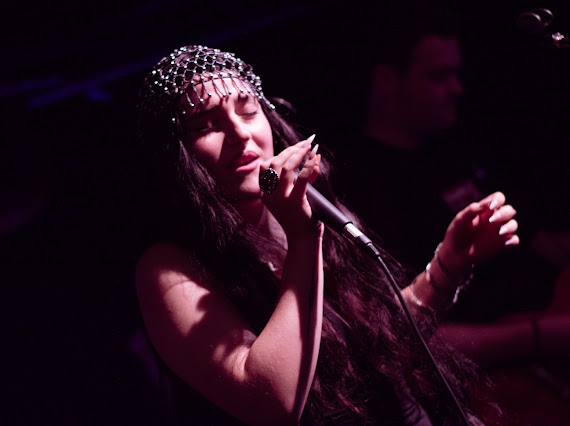
Throughout your writing, you pay homage to your Balkan roots. How do you keep that heritage alive in what you create?
First of all, I never had that before moving here. I don't know if everybody goes through a kind of identity crisis when they move to a bigger city, but I started to appreciate my roots and where I'm coming from in such a deep way. I started to remember everything my grandpa used to teach me. He was extremely traditional, and he was really really passionate about culture and tradition.
Balkan music is big in my country, but it's pretty unknown here; but it's very beautiful, very spiritual as well. It always talks about your roots and where you're coming from. In traditional music, there are certain genres, for example, there's a genre called Doina, it's so deep, and I love bringing that specific area of the culture into my music because it really feels like the right thing for me to do.
I feel like I'm slowly, slowly about to finish probably one of my biggest projects ever. I'm making a proper album where I'm blending a lot of Balkan influences from the specific instruments to themes to combining the languages together. But besides that, I'm always adding flavours from riffs, and playing flute. I always make a reinterpretation of certain songs my own way in Romanian, and I love doing that.
I have my normal set with my ‘normal’ original music and then boom in the middle, I bring this kind of song, and I play flute and sing in a different language as well. And people love it, and they always come to me. Sometimes they don't know what to call it. Some people say it sounds a little bit Arabic, and I hear it, but it's quite different.
For your upcoming EP, you’ve gone with the waterfall release method, what made you want to do this rather than the other promotional methods out there?
I'm an independent artist. I know how to make music, but I do not know how to promote myself. I'm still learning. I'm not great. I had moments when I was like, maybe I should not release that often, but then everybody says, ‘No, you have to be consistent, you have to release every month’.
Then I just had these thoughts fighting each other. So, I decided it’s good for people to digest every single stage and the EP shows three different stages of a relationship…
The first song is really about the honeymoon stage, but on a very deep level, because I talk about feelings above love. The feeling of your body and soul committed to that person. It's such an insane feeling that you cannot even explain, but you're absolutely obsessed with that person. It's quite obsessive to be honest with you, but not necessarily in a toxic way.
Where the second song that I released last month represents the questioning stage. Questioning if they're the perfect person for you. You don't know what to do, and it's the question, do I love you or do I need you?
And then the third song is going to come out, and it's really the end of the story, which is not a very happy end, but all these thoughts gathered together to that. I don't have a title for that song yet. When I have gigs, I'm always asking people for their opinion because I need a title for that song.
You described your headline show as conceptual. Can you give us an insight into that without giving too much away?
I’m still working on it, I want the EP to be out first, but as an artist, at some point, somebody asked me, "What's my purpose as an artist?" and I gave an answer, but then I had to think more about what my purpose really is, especially to people. How am I helping the people, and am I bringing my religious self into the picture or my spiritual self?
That grounded me and helped me understand that through art you can help people so much, for example, when I'm singing in church. People come to me, and they tell me that I healed them, which sounds very cheesy, and I don't want to bring cheesiness into this interview, but that's real.
I want to bring honesty and vulnerability. I feel like it's very important to be very confident with vulnerability.I really want to give people this sense of, “ hey, you're going to feel good”... But sometimes, it's not necessary to explain what you want the audience to feel because, when you hear somebody singing in a different language, and you don't understand what they're saying, you can still feel so good, you get goosebumps. That's what I'm trying to do.
I want to give those emotions to people, those messages, this kind of feeling of honesty to them and to create this overall safety feeling. That's what I want to create. I want to have quite an intimate setup, like plants and candles and all that stuff, close to the audience. I just want to sing just like I would talk to them, so that's my whole idea of the concert that I want to have.
Your EP tells a love story, with spiritual elements intertwined. What kind of love are you exploring throughout the project? Is it romantic, self-love or platonic?
The whole project is about young love. When I was young, I was just rushing, rushing to have them [relationships], and rushing into them. From the get-go, you say “my god, this is my person. I'm going to marry this guy. I'm so in love with him", but I've been with my current partner for almost six years, since we were 18, and if I compare our relationship in the first year with our relationship now, it's so funny.
I thought I was in love with him after two months, which was not true. Now I realised that actually the proper love was after a year, as the time was passing, and the feeling was actually growing.
That's kind of what I wanted to express in the first song. This whole euphoria of that stage, the honeymoon stage. We all love the honeymoon stage, and it's bad when it's ending, but it's natural as well.
So I guess that's where the reality check came into it; the whole questioning “what is this?” “Do I need you because I don't want to be alone?” I felt that at some point in my life, especially with the long-distance situation. He is my muse, though, so he deserves the credit.
And then the breakup song, I sometimes think about my current situation, obviously, I imagined what I would do, I’ve combined that with the experiences I've heard from a close friend. Just seeing her suffering made me feel what she was feeling. It's so insane, I empathise so easily sometimes. That's why I don't watch the news. I cry.
So yeah, just thinking and putting myself in that position genuinely made me feel that without even having it. So that's how that whole story was built. It's a sad ending, but a real ending, I guess.
Thank you for joining me today and sharing your story! Before I let you go, what's one piece of advice you’d give someone who wants to make a big life change in order to pursue their dreams?
I don't even have to think about this answer because it's something I've struggled with for so long and wish I believed it from the start. It's okay if you want to be different. It's okay if you want to do a very niche thing that can be in any creative field. It's okay if people call you underground or weird.
You don't have to be like everybody else. You're not going to be good if you only do whatever they think is right for you. You're actually going to suck, most likely. Trust me, you're not even going to feel fulfilled or proud of your own work. You're just going to waste time.
That's what I did. I wasted a lot of time thinking that I'm supposed to do something else. And when I said, "Yo, I actually like doing this, and I'm going to try it,” I felt so good! It sounds cheesy and lame, but be yourself.
Support Young Creators Like This One!
VoiceBox is a platform built to help young creators thrive. We believe that sharing thoughtful, high-quality content deserves pay even if your audience isn’t 100,000 strong.
But here's the thing: while you enjoy free content, our young contributors from all over the world are fairly compensated for their work. To keep this up, we need your help.
Will you join our community of supporters?
Your donation, no matter the size, makes a real difference. It allows us to:
- Compensate young creators for their work
- Maintain a safe, ad-free environment
- Continue providing high-quality, free content, including research reports and insights into youth issues
- Highlight youth voices and unique perspectives from cultures around the world
Your generosity fuels our mission! By supporting VoiceBox, you are directly supporting young people and showing that you value what they have to say.