

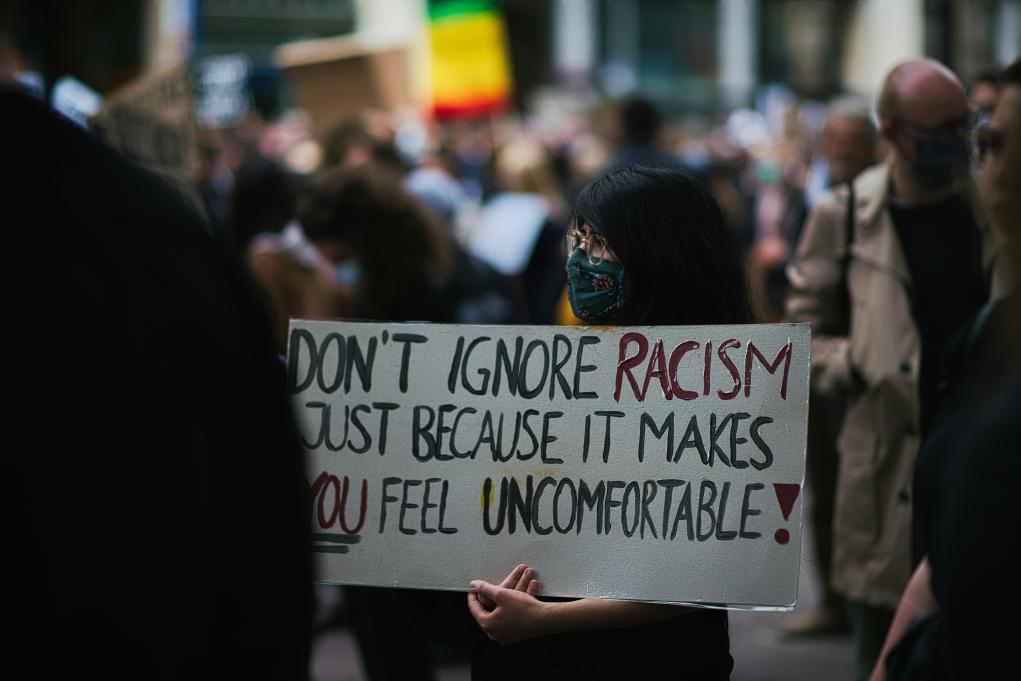
As a Chinese woman growing up in London, I spent a long time wondering why some strangers seemed to dislike me on first glance, before I had spoken, acted, or done anything at all. The question lingered because it resisted ordinary explanation. I was quiet, studious, largely invisible. Yet hostility sometimes appeared fully formed, as if I had already failed a test I did not know I was taking.
Over time, I learned that racism is rarely a single act or a single voice. It appears in different registers, some loud and unmistakable, others subtle enough to be denied by everyone except the person on the receiving end. As these experiences accumulated, a pattern emerged. The racism I encountered tended to come from two distinct types of people, distinguished less by what they said than by what they needed race to do for them.
The first type is the insecure racist, who uses race as a means of emotional self regulation. The second is the supremacist racist, who uses race as a moral and social framework. Their behaviours differ, but their function is the same. Both use race to manufacture hierarchy, and both rely on comparison to feel elevated.
Some of the racism I experienced was overt. There were slurs shouted from passing cars, mockery of accents, and casual commands to return to a country I was not raised in. During the COVID-19 pandemic, this hostility intensified for many East and Southeast Asian people in London. Qualitative research from that period documents increased verbal harassment, social avoidance, and racialised blame directed at young people of East and Southeast Asian heritage, often in public spaces and schools, with lasting psychological effects.
More persistent, however, was the covert racism that operated under the cover of politeness or humour. Questions about where I was really from, compliments that didn't exactly feel like compliments, and assumptions about competence or temperament all carried an implicit message about belonging. These moments align closely with what psychologists describe as racial microaggressions, everyday interactions that subtly reinforce racial hierarchy while remaining socially defensible to the speaker. Individually they are easy to dismiss. Collectively they shape how you are seen, and how you learn to see yourself.
Understanding the motivations behind these interactions became essential to making sense of them. The insecure racist is not usually driven by ideology. They are driven by threat. When someone feels unstable in their economic position, social standing, or sense of competence, race offers a ready comparison that requires no self examination. By positioning someone else as inherently inferior, even implicitly, they stabilise their own self image.
In Britain, this figure is often recognisable. Loud, defensive where curiosity might help, quick to reach for racial explanation when life feels unfair. The stereotype is familiar, the aggrieved chav, angry at the world, convinced someone else has jumped the queue. Their racism is blunt, sometimes crude, and usually reactive. When someone like me succeeds, it unsettles them. Race becomes a way to explain away discomfort they do not have the language to process.
Research on perceived racial status threat supports this pattern. Studies show that when individuals believe their group is losing social or economic ground, they are more likely to express hostility toward minority groups and oppose policies designed to reduce inequality. In my own experience, this type of racism surfaced most clearly in academic and professional environments. When I performed well, my achievements were reframed as unearned, attributed to imagined advantages or diversity initiatives. The hostility was inconsistent, emerging most strongly when someone felt outpaced or exposed. It was not confidence speaking, but insecurity seeking relief.
The supremacist racist operates differently. This type does not shout. Their racism is colder, quieter, and far more assured. If the insecure racist is reactive, the supremacist racist is composed. In cultural terms, they resemble the Draco Malfoy type, raised on the assumption that hierarchy is natural and that their place within it is self evident. They do not need to prove superiority because they believe it is already established.
This type does not use race as a temporary emotional support but as a foundation for identity and worldview. Inequality is not an unfortunate by product of social systems but a reflection of how the world ought to be ordered. They speak the language of civilisation, culture, and standards. Their racism is often framed as concern rather than hostility, delivered in reasoned tones, but the conclusion is always the same. Some people are meant to lead. Others are meant to follow.
This orientation is well captured by the concept of social dominance orientation, a psychological trait associated with preference for group based hierarchies and opposition to egalitarianism. Individuals high in social dominance orientation are consistently more likely to endorse racist beliefs and support policies that preserve inequality across cultural contexts. What distinguishes this type is not volatility but certainty. They do not need to be personally struggling to hold these views. Their racism exists because it is ideological rather than reactive.
Despite their differences, both types rely on race for the same underlying purpose. Racism functions so efficiently as a tool for status management because race is immediately visible and socially legible in a way that intelligence, wealth, or competence are not. Intelligence must be demonstrated, wealth accumulated and displayed, competence proven repeatedly over time. Race, by contrast, is perceived instantly and assumed to carry meaning before a word is spoken. It allows rank to be assigned without evidence, effort, or sustained comparison. Where other hierarchies require work, race offers a shortcut, a preloaded signal that can be activated at first glance and defended through convention rather than proof.
Even the most subtle forms of racism perform this function by reasserting who is considered central and who remains conditional. This is not merely a matter of personal perception. In the year ending March 2025, more than 122,000 hate crimes were recorded in England and Wales, with race remaining the most commonly cited motivating factor. Survey based research suggests that experiences of racial hostility are even more widespread than official figures imply, particularly among East and Southeast Asian communities, nearly half of whom report experiencing a hate crime within a single year.
As a Chinese woman growing up in London, I was often encouraged to doubt my own pattern recognition, to treat racism as a series of misunderstandings or isolated incidents. But the pattern has proven consistent. Some people use race as a bandage for insecurity. Others use it as a blueprint for hierarchy. Different motivations lead to the same outcome.
What has changed for me is not the existence of racism, but my relationship to it. Understanding these patterns has shifted where I place responsibility. For a long time, I believed that if I softened myself, adjusted my behaviour, or became more palatable, the hostility might ease. Now I recognise that for some people, the reaction precedes the interaction. The judgement is made before I arrive. In those cases, there was never anything I could have done differently. They would have resented me anyway.
Racism is not always expressed as hatred. More often, it functions as status management. Race remains one of the easiest tools available for that purpose, and until that changes, its use will continue to feel both personal and structural at the same time. Recognising this has been clarifying. It has freed me from the quiet labour of trying to earn acceptance from people who were never offering it in the first place.
Support Young Creators Like This One!
VoiceBox is a platform built to help young creators thrive. We believe that sharing thoughtful, high-quality content deserves pay even if your audience isn’t 100,000 strong.
But here's the thing: while you enjoy free content, our young contributors from all over the world are fairly compensated for their work. To keep this up, we need your help.
Will you join our community of supporters?
Your donation, no matter the size, makes a real difference. It allows us to:
- Compensate young creators for their work
- Maintain a safe, ad-free environment
- Continue providing high-quality, free content, including research reports and insights into youth issues
- Highlight youth voices and unique perspectives from cultures around the world
Your generosity fuels our mission! By supporting VoiceBox, you are directly supporting young people and showing that you value what they have to say.