

Why Does Viral Food Seem Intentionally Made "Unhealthy"? Getting to Know Hyper-Palatable Foods (HPF)
I don't really mean to say that all viral foods are deliberately designed to wreck our bodies, though.
That title popped up purely from my own thoughts when I was having fun scrolling through reels and videos of foods that are currently trending. At first, those clips totally made my mouth water. But a few seconds later, a tiny doubt suddenly popped up in my heart.
"There's so much chocolate... isn't that a bit too much?"
"It's that spicy, won't it give me a stomach ache?"
"If I eat this, will my daily calories just explode?"
Because of those little questions, I got curious and started looking into it. Turns out, the answer isn't as simple as
"viral food is definitely unhealthy."
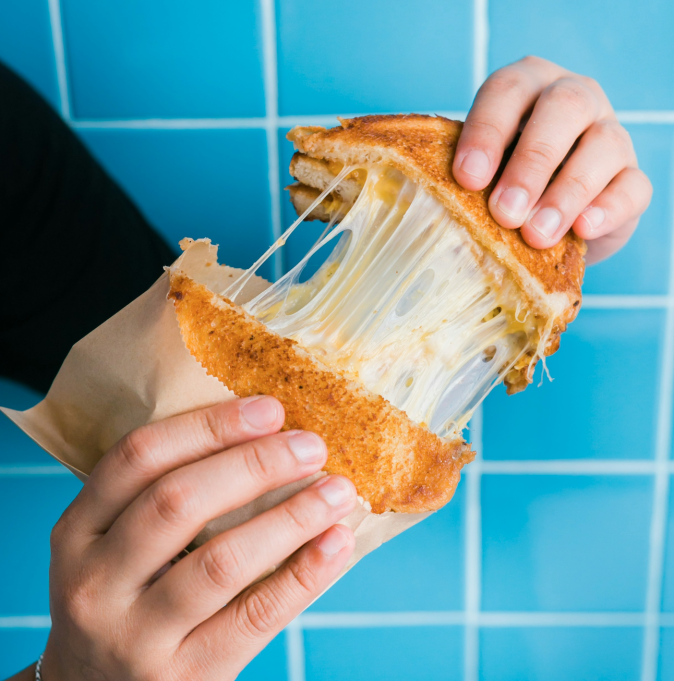
Have you noticed how the pattern has been so similar lately? Cheese keeps getting stretchier, chocolate gets thicker, sauces get heavier, and the spiciness gets way more extreme. It feels like food nowadays isn't competing to nourish our bodies anymore, but racing to make us go "wow," impress us, and make us want to keep coming back for another bite.
This shift in appearance isn't a coincidence, you know. Viral food isn't actually engineered to ruin our health; it's just designed as carefully as possible so our taste buds and eyes fall in love at first sight.
If we trace it back, this all has to do with our evolutionary history. Back then, our ancestors lived in an environment where food was scarce. So, the human body evolved to crave calorie-dense foods—especially those rich in sugar, fat, and salt—as a survival trick to store energy reserves. The problem is, our body's biology changes way slower than the food environment around us. In the medical world, this is called an evolutionary mismatch, or a misalignment between our ancient genes and our modern lifestyle.
This shift goes way beyond just sweet desserts. From super-sweet jumbo drinks to savory foods with incredibly heavy seasoning, the whole industry feels like it's racing to make food experiences bigger, richer, and more MCF-dramatic.
Now, in the scientific world, engineered modern foods like this have a cool name: Hyper-Palatable Foods (HPF), or foods with an overwhelming deliciousness.
I found a really cool 2019 study by a nutrition researcher named Tera L. Fazzino. After analyzing 7,757 types of food, her team found that 62% of them fit into this hyper-palatable category.
Tera explained that natural food is usually the whole package. Its natural sugar is accompanied by fiber and water—a simple example is a whole apple. This natural matrix is what makes whole fruit give us a genuine feeling of fullness. It's the exact opposite of an apple-flavored drink, which might have a similar sugar content but leaves our stomach feeling totally empty.
Dietary fiber does a huge favor by slowing down gastric emptying, making us chew longer, and physically stretching the stomach wall, all of which automatically signal the brain that we're full.
On the other hand, hyper-palatable foods are characterized by combinations of sugar, fat, salt, and refined carbohydrates in amounts that are rarely found in nature. This super-indulgent, hyper-rewarding combo basically "tricks" our natural fullness signals. That's why it's so easy for us to accidentally overeat, even when our body's energy needs are actually met.
There's a cool experiment by Hall et al. (2019) at the National Institutes of Health (NIH) that proves this. Participants who were given an ultra-processed diet automatically ate about 500 kcal more per day compared to when they were given a minimally processed diet—even though both types of food had been precisely matched for initial calories, sugar, fat, fiber, and macronutrients.
Why Are So Many Foods Made Like That Just to Be Irresistible?
Latest advances in food science now give manufacturers total control to tweak sweetness, texture, aroma, mouthfeel, all the way to shelf life in ways that could never be done decades ago. Plus, with social media algorithms that absolutely love striking visuals, food products end up optimized not just to taste good, but to look aesthetic when photographed, exciting when shared, and easy to remember.
Fierce competition in the food business is also a trigger. We might wonder: if food doesn't actually need overflowing cheese or excess sugar, why do producers keep making it that way?
Because on social media, a product only has a few seconds to steal our attention while we're busy scrolling. That hypnotic "cheese pull" or cascading sauces end up becoming a really powerful visual marketing tool.
This dynamic doesn't mean food companies have bad intentions to hurt us, though. They're just competing in a market where taste and instant gratification are the main deciders for making buyers come back. That's why they keep looking for that "bliss point" formula—the most perfect balance between taste and texture that's guaranteed to make consumers instantly say,
"Oh my gosh, this is so good!"
As consumers, there's one important thing we need to remember: what satisfies our taste buds the most instantly is rarely aligned with what our body actually needs.
Why We Often Eat More Than We Realize
If you look closely, our daily eating habits have slowly started drifting far away from actual nutritional needs. Honestly, it's so hard to control.
Items we casually call "snacks" can sometimes pack the same calories as a full-sized heavy meal. Interestingly, we rarely feel that extra calorie load. We don't feel uncomfortably stuffed or feel like we've eaten "too much," so these extra calories just slip right past us without us noticing.
Let's look at a few examples of these commercial portions:
• A large cup of boba drink can average around 400–600 kcal.
• One thick premium gourmet cookie can easily contribute about 400–700 kcal.
Yet, standard nutritional guidelines mention that the average daily requirement for a teenage girl is around 2,000 kcal per day.
It's so easy to underestimate these hidden numbers, right? Even if the snack doesn't look giant, its energy density skyrockets due to the layers of refined ingredients inside.
As a result, we can consume a whole lot of energy, sugar, or sodium from just a single snack without getting a long-lasting feeling of fullness. This is why we often feel, "Ah, that was just a snack, I haven't eaten rice or bread yet," and then a few hours later, we still eat a full-portion dinner.
Why Is Stopping Eating So Hard, Anyway?
Turns out, that urge to keep reaching for more isn't always because we lack self-discipline. Our brain's reward system is also responsible for all of this.
A neuroscientist named Kent Berridge explains that the reward system in our brain is divided into two pathways: liking and wanting.
• Liking is the actual satisfaction and pleasure we feel while chewing that food.
• Wanting is the strong motivational drive that forces us to seek and add more.
Interestingly, these two pathways aren't always on the same page. We can be in a phase where the extreme sweetness or saltiness of the food is already too much and doesn't give us much pleasure anymore (low liking), but our brain's reward system still aggressively tells our hand to grab the next bite (high wanting). This natural drive keeps going even when our tongue has actually had enough.
Can Our Taste Preferences Change?
So, does this mean we have to make enemies with all viral food trends and not touch them at all?
I don't think so. The main issue isn't a single specific food, but rather how our relationship is with a modern food environment that's literally designed to steal our attention. Being aware and understanding how this environment works is already a really cool first step toward making wiser decisions.
The good news is, human taste preferences are highly plastic—meaning they're super flexible and can adapt over time. Studies on repeated exposure show that our taste preferences are shaped by habit, not something rigid. The foods we eat most often will slowly become the flavor profiles we naturally prefer.
For example, several clinical trials on cutting down sugar and salt prove that if we reduce hyper-palatable foods gradually, our taste bud thresholds will reset. Over time, natural whole fruits will taste way sweeter, and home-cooked meals will taste much richer in flavor.
The same thing happens when we move abroad. At first, the local food there might taste bland or weird, but over time, our tongue adapts to that new baseline.
I've started trying a few fun little habits myself. If I buy a commercial food with a giant portion or a super intense flavor, I don't always finish it in one sitting. Sometimes I save half for later, or I split it with a friend. Even though cutting down portions feels less satisfying at first, I realized that eating satisfaction doesn't always have to come from a totally clean plate.
Slowing down our eating pace also helps a lot. By enjoying the texture and aroma in every single bite, it becomes much easier for us to catch the honest biological fullness signals from our body before we accidentally overeat.
The ultimate goal, of course, isn't to be totally anti-modern processed food—because that's just not realistic for life nowadays. But the goal is to make sure we eat that food because we truly choose it consciously, not because of an automatic habit we never question.
This full awareness (mindfulness is what keeps us from needing to fear modern food innovations. It gives us space to think about our own impulses. Because the biggest challenge isn't the existence of that viral food, but whether we want to ask ourselves why we wanted that food so badly in the first place. In short, we need to ask: 'Am I still in control of my food, or is my food starting to control me?
Support Young Creators Like This One!
VoiceBox is a platform built to help young creators thrive. We believe that sharing thoughtful, high-quality content deserves pay even if your audience isn’t 100,000 strong.
But here's the thing: while you enjoy free content, our young contributors from all over the world are fairly compensated for their work. To keep this up, we need your help.
Will you join our community of supporters?
Your donation, no matter the size, makes a real difference. It allows us to:
- Compensate young creators for their work
- Maintain a safe, ad-free environment
- Continue providing high-quality, free content, including research reports and insights into youth issues
- Highlight youth voices and unique perspectives from cultures around the world
Your generosity fuels our mission! By supporting VoiceBox, you are directly supporting young people and showing that you value what they have to say.