
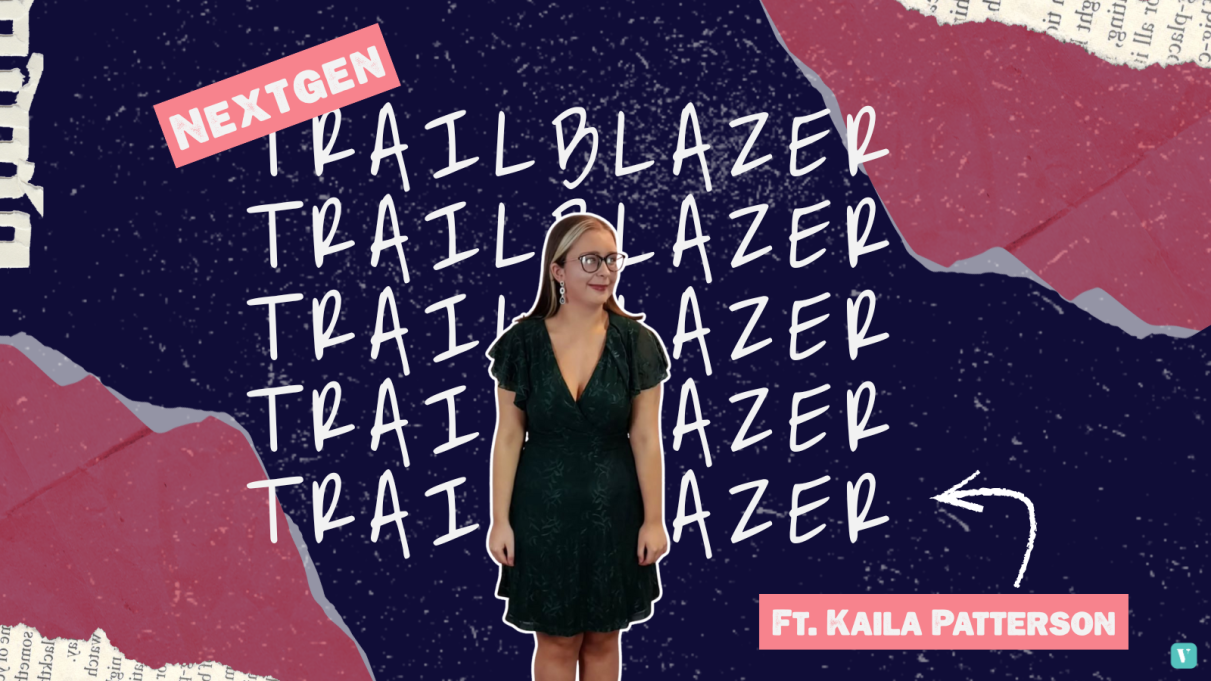
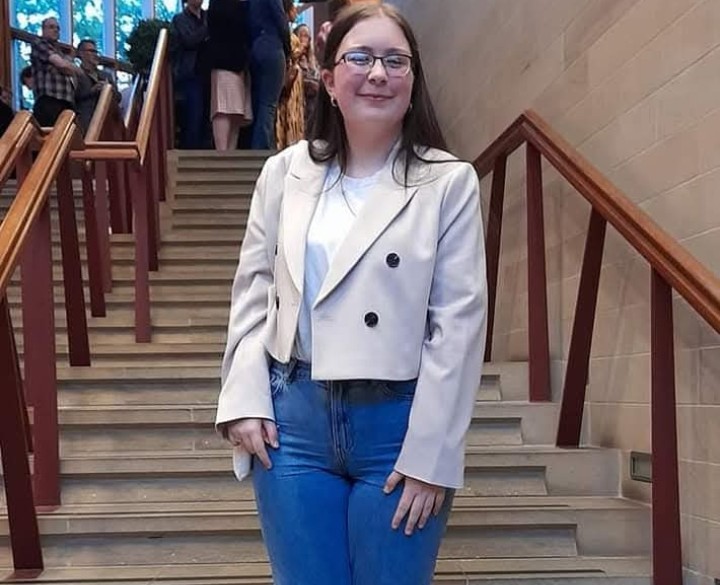
Ireland-based author Kaila Patterson began her writing journey early, releasing her debut novel when she was only thirteen years old. She's known for her love of history, fantasy, and poetry, and doesn’t box herself in, committing to various writing forms from plays and novels to poems and articles. Her passion for writing has earned her finalist spots in the Rising Voices Awards and the Lucky Jefferson Awards, as well as led to the development of her first play, ‘The Boy Without a Birthday’. Outside of writing, she's an avid reader and, self-proclaimed history geek.
Interview conducted by VoiceBox's Lauren Louisha

Kaila, you’ve achieved so much as a young writer, from publishing your first book to featuring in The Irish Times and other literary magazines. Can you tell us a bit about how your writing journey began?
I have always loved daydreaming ideas, but the actual writing began because I’m an avid reader. When I was in primary school, the first book that caught me was Jacqueline Wilson’s Hetty Feather. I found happiness on every page. Ever since, I've been searching for the book that brings the same sensation – or trying to write it – but there's nothing like the first story you love.
I remember being blown away by the plot twists and thinking, ‘I want to do that; I’m going to make people feel like that.’ I suppose that was my inciting incident because things moved quickly afterwards: I researched, I read, I wrote until my hands were sore. I do want to say though, that I only got to wander around those authors' minds because I was given those books, because my parents worked tirelessly to afford all the stories a girl could want and went to the ends of the earth to get them. My journey began with reading and the people who never underestimated its importance.
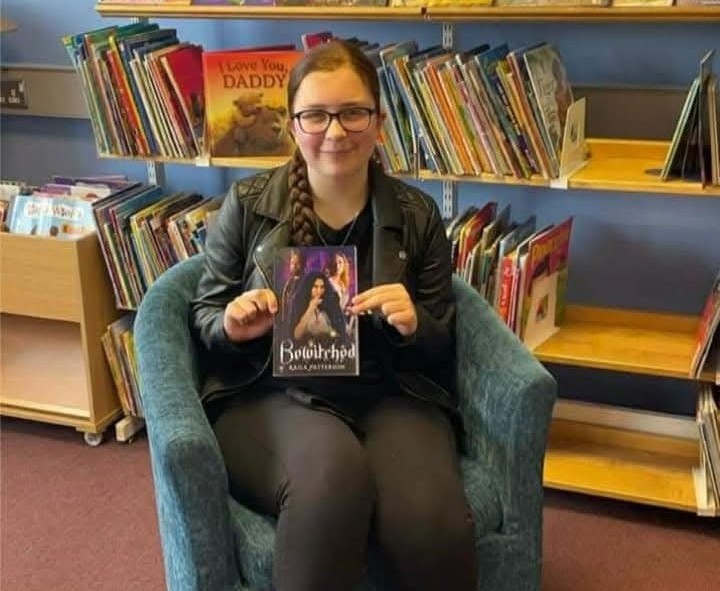
You published your novel, Bewitched, when you were only thirteen years old; that's incredible! What made you choose historical fantasy as the genre of your first novel?
Thank you very much. I’m an absolute history geek and love historical fiction novels, and after learning about how women were condemned for so-called witchcraft, there didn't seem to be many teenage novels set during that period which let my reader self down slightly. Nevertheless, I felt a strong calling towards writing about the witch trials, so I based the novel on them and started my research, but the fantasy element came by accident. A few months before Bewitched, I had been jotting plans and drawing characters for a fantasy-esque novel about female friendship and royalty. I had pages of ideas intended for when I was ‘old enough’ to write a book, shut away in a cupboard. As I was writing Bewitched, those old concepts and characters started to show in the references to princesses and knights, for example, and especially in Eliza and Lucie’s relationship. Throughout the process, the historical and fantastical strands of thought came together as their story did. I let them lead the way.
From articles, plays, novels and poetry, you dip into many forms of writing. Is there one in particular you lean more towards?
I do believe I'm a novelist at heart. Novel writing emulates growing as a person for me; you learn more about yourself as your characters develop. I love how the page reveals new aspects every day, how the story deepens as all the bits and pieces of the first draft unite and how brilliant getting to the end feels.
I’ve written three novels, and since they took me on three different paths, three new explorations of my craft and myself, they are particularly special. That said, I’ve certainly written more poetry than prose. I often write quick poems not long after experiencing something so that the overflowing joy or embarrassment or rage is pumping and the words are raw, as a way of bottling emotions to use in my stories later on.
As I have explored new forms, though, I've found my work changing shape based on what message the story needs to convey, the perspective I want the audience to see it through and how I hope that they feel. I've tried rewriting a short play as a novel chapter, and I've turned novel chapters into play scenes. Sometimes that fixes things, sometimes I’m forced to drop my stubbornness and move on to a new project.
What was the inspiration behind your short play, The Boy Without a Birthday?
Funny enough, The Boy Without a Birthday was based on a chapter from my second (currently unpublished) novel. The play follows an eight-year-old whose birthday wish is for his absent father to come home, a flashback moment that his older self experiences as the book’s protagonist.
As a writer, I want to explore realistic, albeit difficult, family dynamics because growing up in the North of Ireland, I've witnessed so many types of families, but so few are represented enough.
I also find stories from a child's perspective interesting, as while kids are resilient, they have a limited understanding of the world. Have you ever looked back on your childhood and realised something so obvious only in hindsight? That's the dramatic irony I try to create and the fundamental sadness of The Boy Without a Birthday. It's a big part of the book, too, since the protagonist gradually relearns what he has been put through and what he must do with it.
Do you have a writing routine? If so, can you tell us about it?
My writing routine is very much wherever and whenever. Unless I have a deadlineor set workshop time, I like how spontaneity keeps my enthusiasm high for longerprojects. If I'm at home, I switch on calming multi-coloured lights and play musicthat sets the tone of the story.
While that might be classical for historical fiction, I've also played noughties anthems for a teenage disco scene. Since getting my dog, Poe, he also tends to watch me write, and I'm convinced that he brings literary wisdom. However, I have written stories on late-night trains and Spanish beaches, on paper and a laptop (and once the back of my hand), and with or without an animal on my lap. Regardless of where I am, I'm always somewhere else.
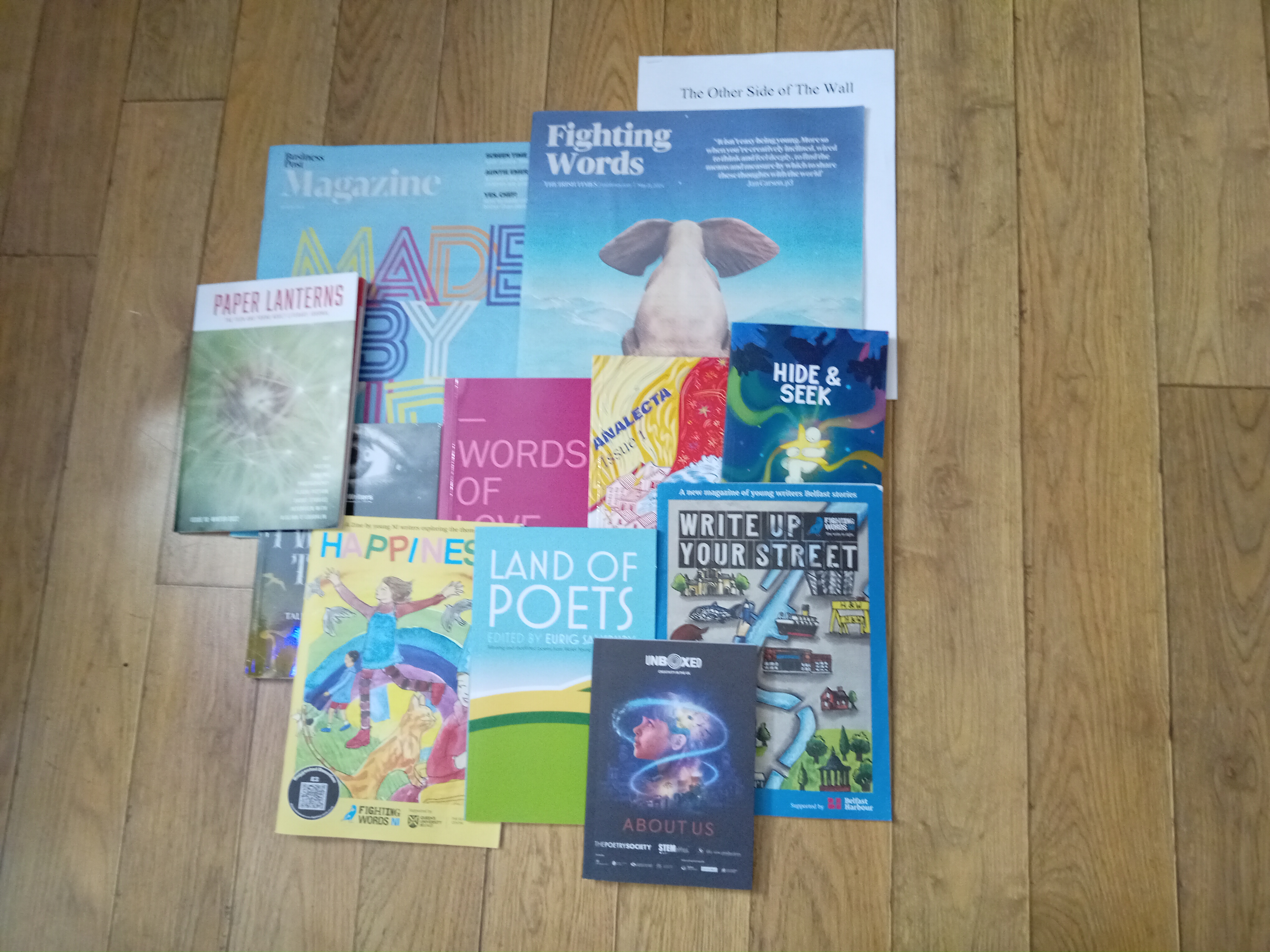
How did your time as a ‘Fighting Words Northern Ireland Young Playwright' influence how you write now?
The Young Playwrights programme genuinely shaped my love for playwriting and taught me the fundamentals that still go into my work. We studied psychological theories and story archetypes which still influence my character creation, and the dedicated mentorship was invaluable – that goes for all of the support I've received from Fighting Words. I'm now more aware of writing non-clumpy, flowing dialogue because, as a playwright, I had to keep my actors in mind, and I found so many new dimensions that writing for the stage can add to a text. I am beyond grateful for the mentoring, encouragement and tools from FWNI throughout my teenage years. They are one of the best literary foundations a wee writer could ask for.
Your next novel is still a work in progress, right? What can you tell us about the story so far?
Yes! It's a Young Adult novel about a star hurling (a Gaelic sport) player who trains a very unlikely team. When I played camogie (a variation of hurling) as a kid, I wasn't half as skilled as my protagonist, but I still felt connected to the spirit of the game, so the story is more of a why we play than a how. I've tried to write something accessible to everyone, regardless of whether you're a sports fan or not, because that is the core of the novel: the Gaelic games are for everybody. It's a summer read with lots of quirks, and really, it is a tribute to my culture. When I was drafting it, I used to hear cheers from a local pitch and the snap of a sliotar being struck, so it literally and metaphorically hits very close to home. The book has been written, but there are no plans for publication yet. I've got my fingers crossed for one day, though. Whenever the time is right.
How do you find a balance between your studies and pursuing your writing career?
It can be difficult, but at the end of the day, I strongly value education, and that does take priority. I write a lot less during exam season, but a lot more during the summer, so everything tends to balance out well. Right now, I write on the weekends but rarely from Monday to Friday, which sounds like very little, but chipping away at a project over time can still have great results. My last work-in-progress was mostly written on Saturdays. If I have a writing event to attend, I schedule the academic and creative hours to be equal. I never forbid myself from writing; I work season by season, and that works for me. Since I want to study English at university, though, I do think school works alongside my writing as I'm always inspired by the literary greats and the books I get to analyse.
Ireland is well known for its myths, legends and history. Do these play a role throughout your writing?
In all honesty, I don't know as much about myths and legends as I would like to, but they do find their way into the little details. I make occasional references to banshees, which bring bits of Ireland, and no matter what genre or setting my work has, my home will always slide into unintentional places. Since writing Bewitched, I've focused more on the working class stories of contemporary Ireland and celebrating the symbols, traditions and history of my country. I could still see myself bringing together that Irish life and the fantasy parts of my first book to create something new. Even if I never do, I'm sure that any work digging into Irish mythology would be stunning, and there would be tons of room for unusual metaphors, so I would like to read it if someone else does. As for the history side of things, I've got something growing in the back of my mind, but it's a bunch of broken-up ideas swimming around right now. No spoilers yet.
It's been lovely to have you join us Kaila, and to learn more about your work. Before we wrap up, do you have any advice for aspiring writers?
Thank you for having me! I'm a big fan of VoiceBox’s work, so it was a pleasure. My main tip would be to bring yourself to the page. When I started writing stories set in the North of Ireland, I used to be uncomfortable using slang words like ‘scundered’ or ‘craic’ because they didn't sound formal enough, but then the dialogue didn't sound natural. I used to believe all writing had to be done at a desk. I used to think that real authors didn't talk, look or could be the same age as me. That's not true. Don't neglect the unique experiences, interpretations and angles you can bring to a story because you don't think it's proper or wordy or good enough. Give yourself the time to be authentic, not a cardboard cutout of what an author ‘should be.’ The story starts with yours.
Check out Kaila's Work!
Support Young Creators Like This One!
VoiceBox is a platform built to help young creators thrive. We believe that sharing thoughtful, high-quality content deserves pay even if your audience isn’t 100,000 strong.
But here's the thing: while you enjoy free content, our young contributors from all over the world are fairly compensated for their work. To keep this up, we need your help.
Will you join our community of supporters?
Your donation, no matter the size, makes a real difference. It allows us to:
- Compensate young creators for their work
- Maintain a safe, ad-free environment
- Continue providing high-quality, free content, including research reports and insights into youth issues
- Highlight youth voices and unique perspectives from cultures around the world
Your generosity fuels our mission! By supporting VoiceBox, you are directly supporting young people and showing that you value what they have to say.